


Darkness and light – on the same day. After visiting the Holocaust museum of Yad Vashem in der morning (see yesterday’s post), we continued on to Bethlehem to visit the site of Jesus’ birth inside the Church of Nativity. Read about it in this episode of “Israel Explored – Bethlehem”….


While Bethlehem is only a short drive from Jerusalem, it is situated in the West Bank, which is separated by a wall from the rest of Israel. Entering the Palestinian territory, our bus had to cross a checkpoint at Bethlehem’s city limit.
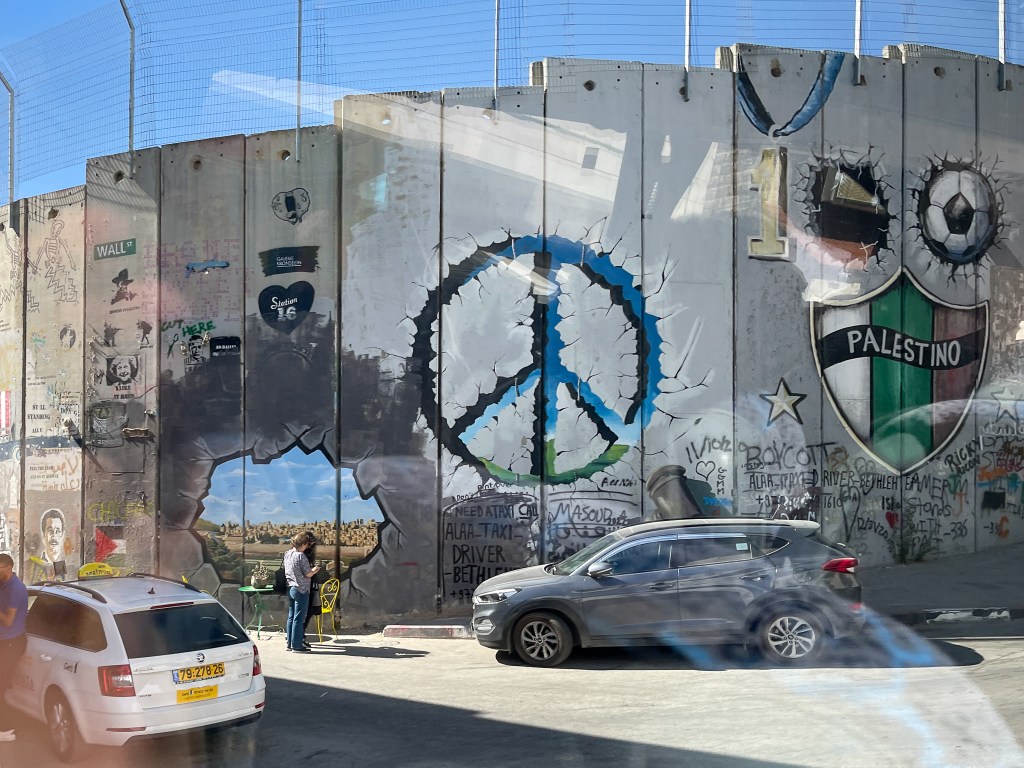
The Israeli West Bank Wall is a separation barrier built by Israel between its territory and the West Bank following a wave of Palestinian political violence and incidents of terrorism inside Israel during the second Intifada (2000-2005). The wall has a total length of 708 km (440 mi). While the barrier was initially presented as a temporary security measure at a time of heightened tensions, it has since been associated with a future political border between Israel and the State of Palestine. Israel describes the wall as a necessary security barrier against Palestinian terrorism, whereas Palestinians describe it as an element of racial segregation and a representation of Israeli apartheid.

The Palestinian side of the wall is known for its many murals. Famous is this one of Leila Chaled, a leading member of the terrorist organization Popular Front for the Liberation of Palestine (PFLP) and one of the first female airplane hijackers in history as she took part in the infamous hijacking of TWA Flight 840 in 1969.



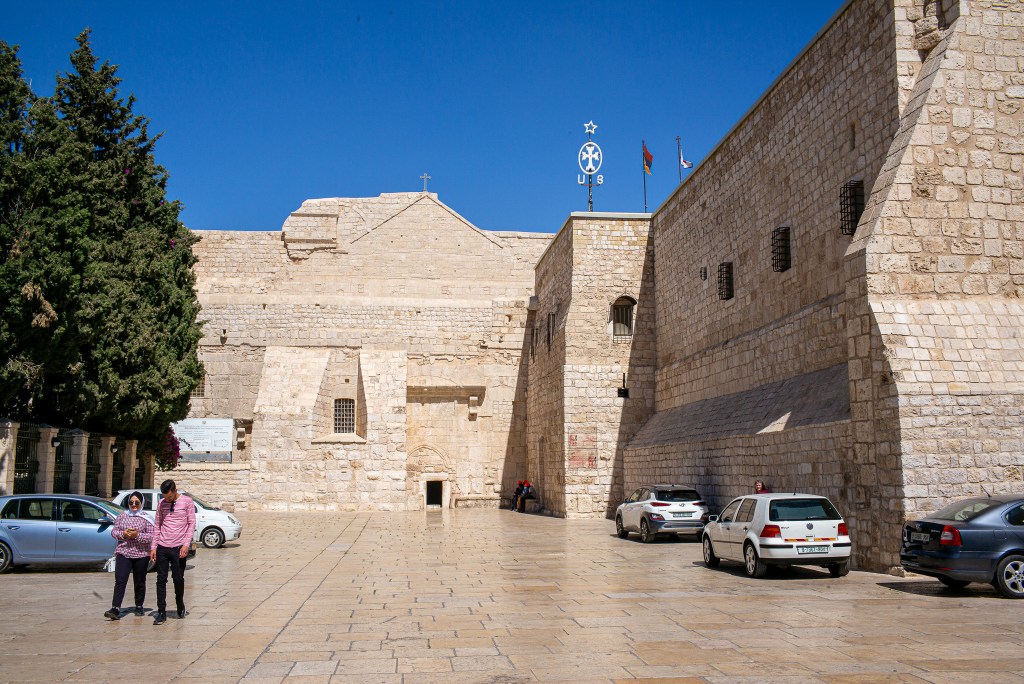
We went directly to the Church of the Nativity on top of the hill of Bethlehem, built over the presumed birthplace of Jesus Christ. The Church of the Nativity is one of the few examples of perfectly preserved early Christian church buildings. The cave under the church, which Christians consider the birthplace of Jesus, was venerated from the 2nd century.
Emperor Constantine the Great and his mother Helena had a memorial church with rich mosaic floors built at the birthplace, which they dedicated to Jesus Christ before 335. It was destroyed by fire during the Samaritan revolts of the sixth century, and a new basilica was built a number of years later by Byzantine Emperor Justinian, who replaced the original octagonal sanctuary with a cruciform transept complete with three apses, but largely preserved the original character of the building, with an atrium and a basilica consisting of a nave with four side aisles.
While other church buildings were damaged in 614 by the Persians advancing against the Byzantine Empire, this church was spared; it is thus the oldest preserved and continuously used church in the Holy Land. It is believed that a relief above the entrance gate depicting the Magi in oriental dress was the reason for sparing this church.

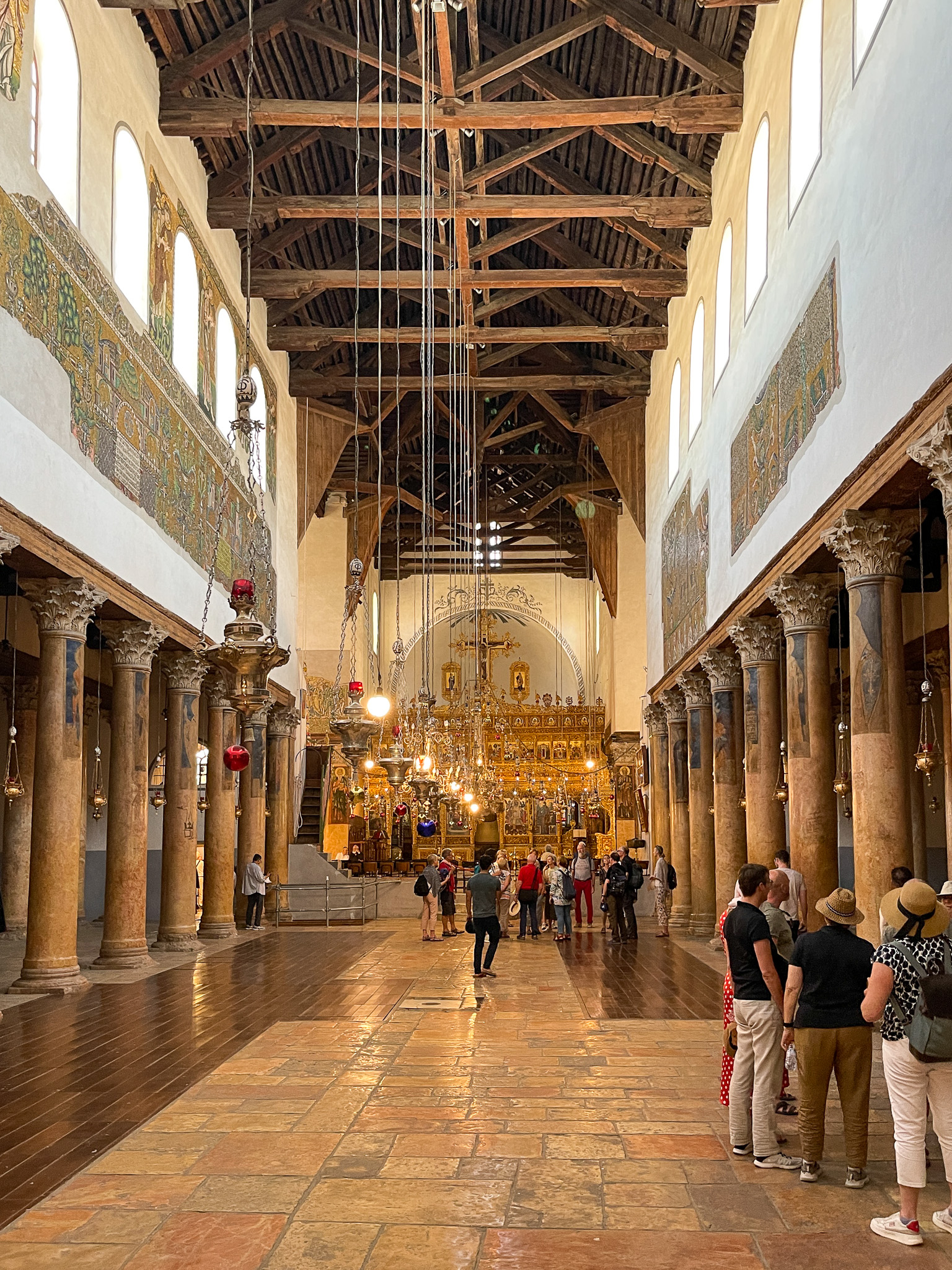
The Crusaders restored the church from the ground up (1161-1169). In the 12th century the world’s oldest preserved organ was built in the Church of the Nativity, it was dismantled and hidden in the 13th century in the face of the Mamluk advance on the city. Unlike other churches in Palestine, which they destroyed, also the Mamlukes left the Church of the Nativity standing.


Two narrow staircases lead to the Grotto of the Nativity, where the place of the Nativity is shown under the altar of the Nativity, marked with a silver star on which is written the Latin inscription “Hic de Virgine Maria Jesus Christus Natus Est” – ‘Here Jesus Christ was born of the Virgin Mary’. To the right of it is that place where the manger is said to have stood.


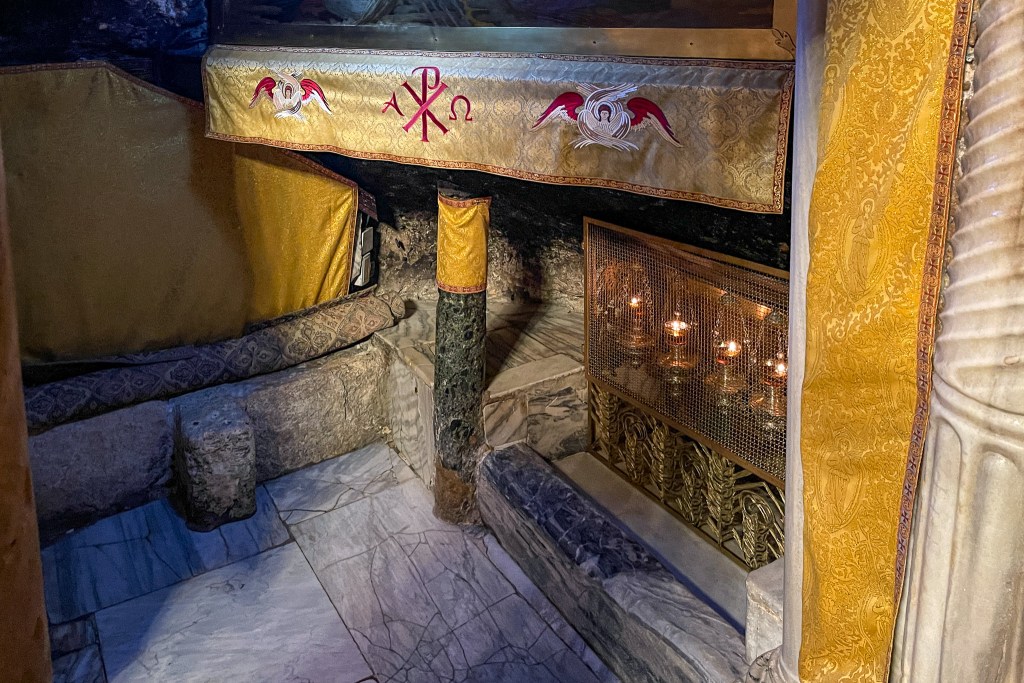
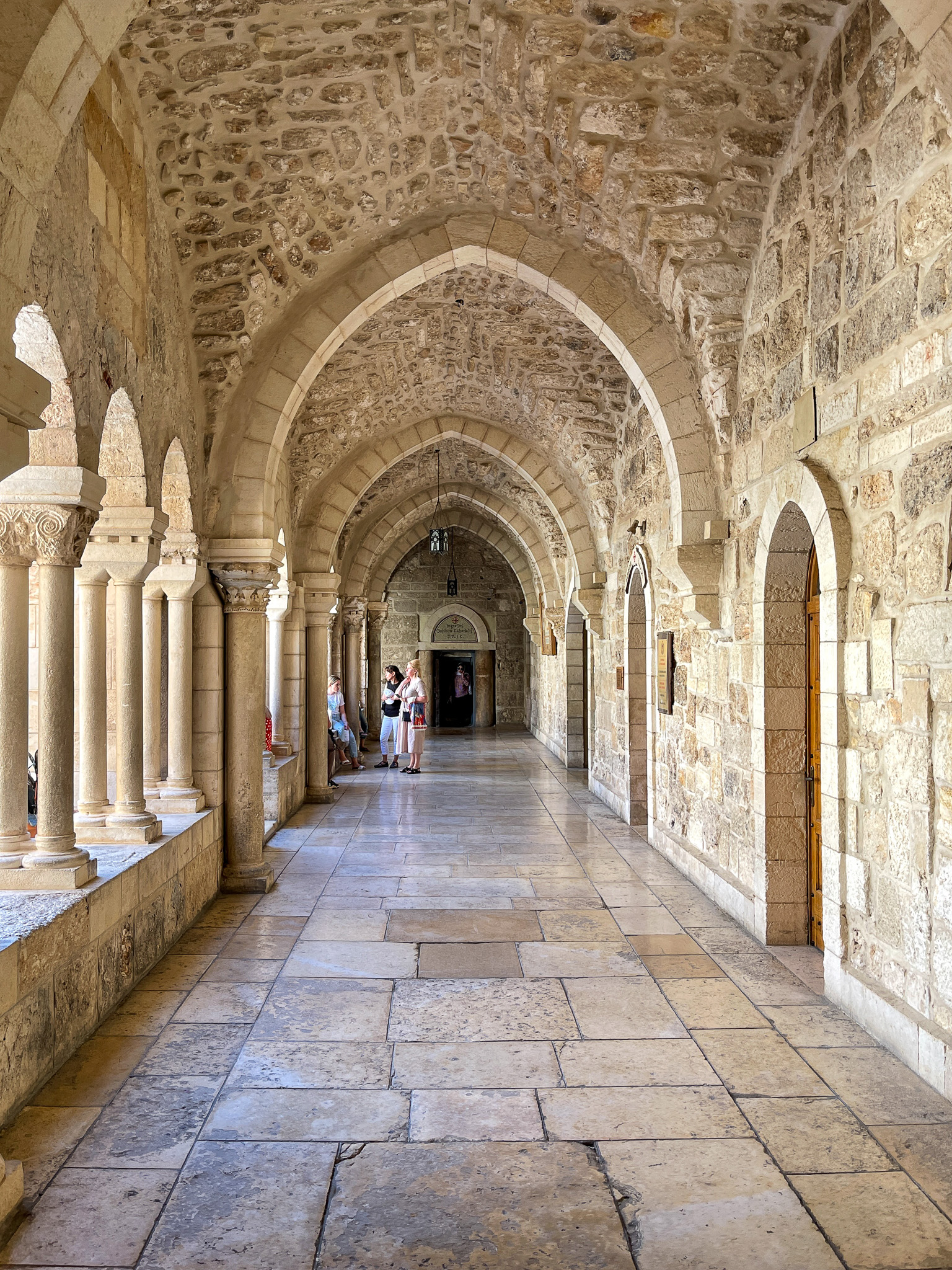
Over the centuries, the complex was expanded and today covers about 12,000 square meters. It consists of three different monasteries: a Roman Catholic, an Armenian Apostolic and a Greek Orthodox. A 250-year-old understanding among religious communities ensures the equal use of the holy site. Since 2012, the Church of the Nativity is a World Heritage Site and was the first to be listed by UNESCO under ‘Palestine’.
Regardless if Jesus was really born at exact this site (some say he was actually born in Nazareth), it has been a continued place of Christian worship for a good part of one thousand nine hundred years, which is an incredible amount of time. And it is a truly fascinating place to visit in the Holy Land.
All photographs were taken with my iPhone 12 Pro Max, that I was forced to use exclusively for my travel photography on this trip, when my brand new Leica SL2-S failed me on the third day.
[Update on the Leica: Already back in Nuremberg, I brought it to the Leica shop in town for repairs. They will have to send it to Leica HQ to have the shutter fixed. Expected time: 4 weeks. Premium brand, premium price, but no premium service. I will keep you posted on the developments]
Stay tuned for more episodes of “Israel Explored”, as we moved on to Jerusalem.
Have a great Saturday
Marcus
Related Posts: