


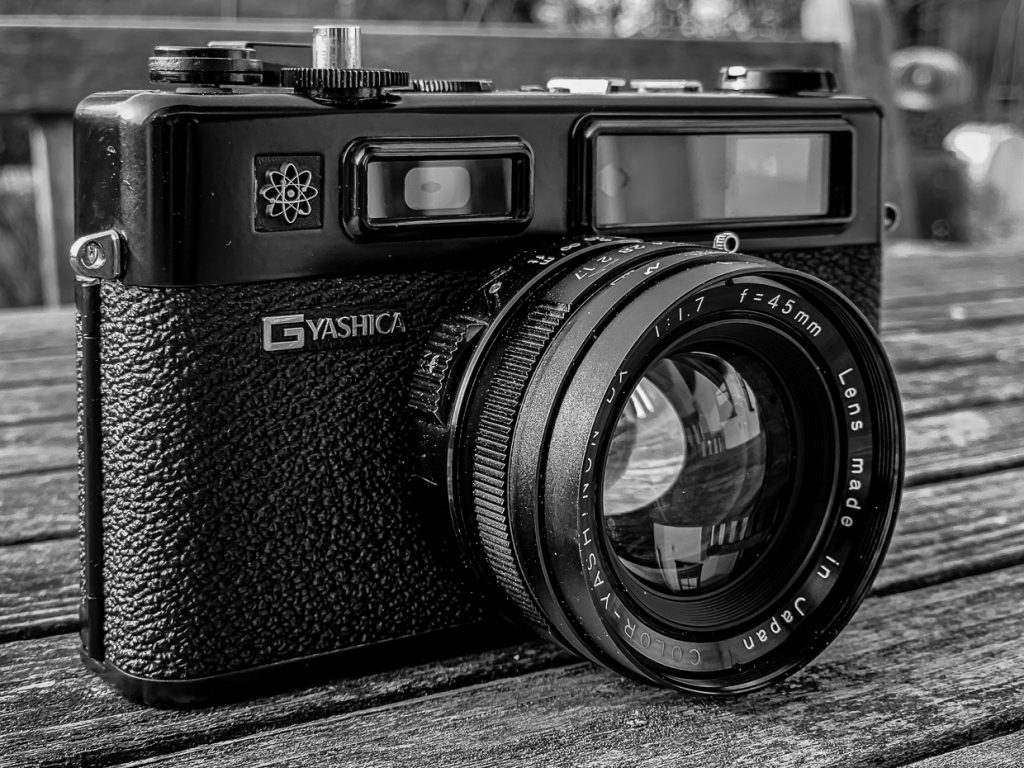
Some camera history to start the week. In my quest to re-enter analogue film photography, I took to eBay to acquire a beautiful vintage Yashica Electro 35 GTN. For the history of this beautiful rangefinder camera and some of my film photographs I took during a test shooting on the Streets of Nuremberg, read the full post.

The History
The Yashica Electro 35 was one of the most popular consumer 35mm cameras of the 1960s and 1970s. It came out in 1966 and was produced in various versions until 1977. Yashica sold more than eight million units in various versions. The fixed lens is the coated legendary Yashinon DX f/1.7 45mm constructed with six optical elements in four groups.
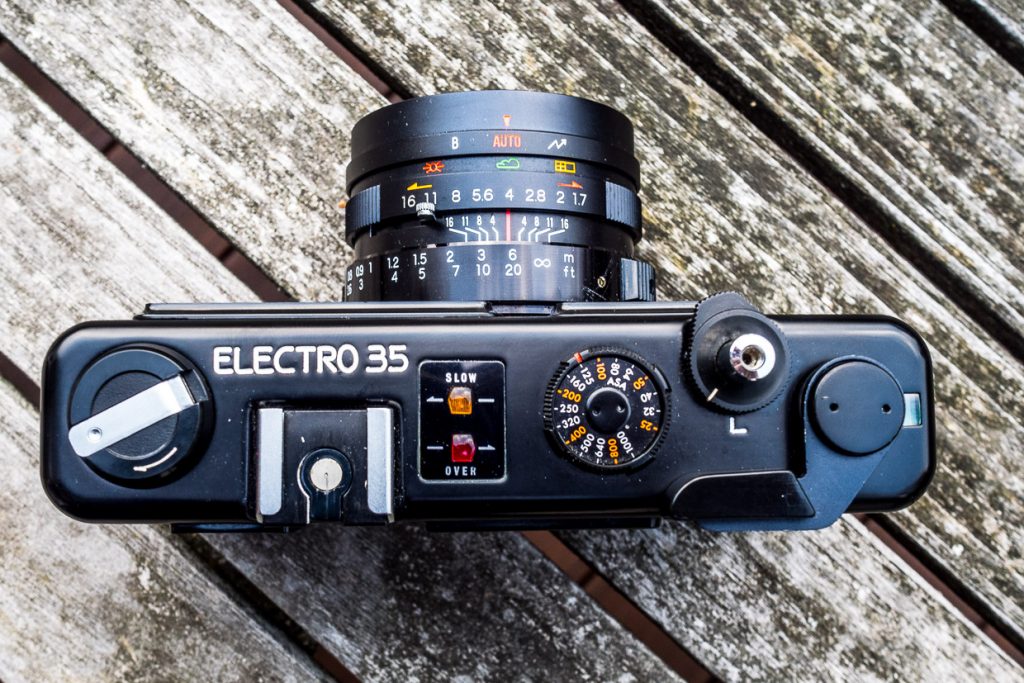
The Yashica Electro 35 is a solid metal camera, weighing around 700 grams. It has a big, clear viewfinder and a fully coupled rangefinder with built-in parallax compensation. It is an aperture-priority camera. The photographer has to pick the aperture, and the Yashica Electro 35 selects the shutter speed, from 1/500 up to thirty seconds or more! The camera has a very silent electronic step-less leaf shutter, an innovation of Yashica. The Electro 35 has no auto-exposure lock and it’s an almost all-auto camera. It features only three manual shutter speeds (bulb, clouds, sunshine), that can be selected on the lens. A shutter release knob threaded to accept a cable extension trigger, and the camera features a self timer with a nominal 8 second delay.
Like with many vintage electronic cameras, the original mercury batteries are no longer available. But modern alkaline replacements work fine with cheaply available adapters (mine came with the camera).
My version, the all black GTN (together with her silver finish sister model GSN) was the fourth Electro model and the flagship of Yashica’s rangefinder cameras. It was introduced in 1973 following the Electro 35, the G, and the GS (silver) / GT (black). While the early models of the Electro 35 had an ASA range from 12-500, the late models like the GSN/GTN have 25 to 1000 ASA. The GSN/GTN also introduced a hot shoe, but is otherwise identical with the GS/GT. Some of the later f/1.7 Yashinon lenses have the Color-Yashinon marking while others do not, but the lens is the the same.
The parts of the camera are all manufactured in Japan, but assembly was either in Japan or Hong Kong. Mine with the serial number H1348235 was a Hong Kong version, as the ones made in Japan had this imprinted on the back of the camera.
The users manual of the Yashica Electro 35 GTN can be found and downloaded on the web.
Before I tell you about my first shooting experiences and show you some results, first some “camera porn” for the eye….


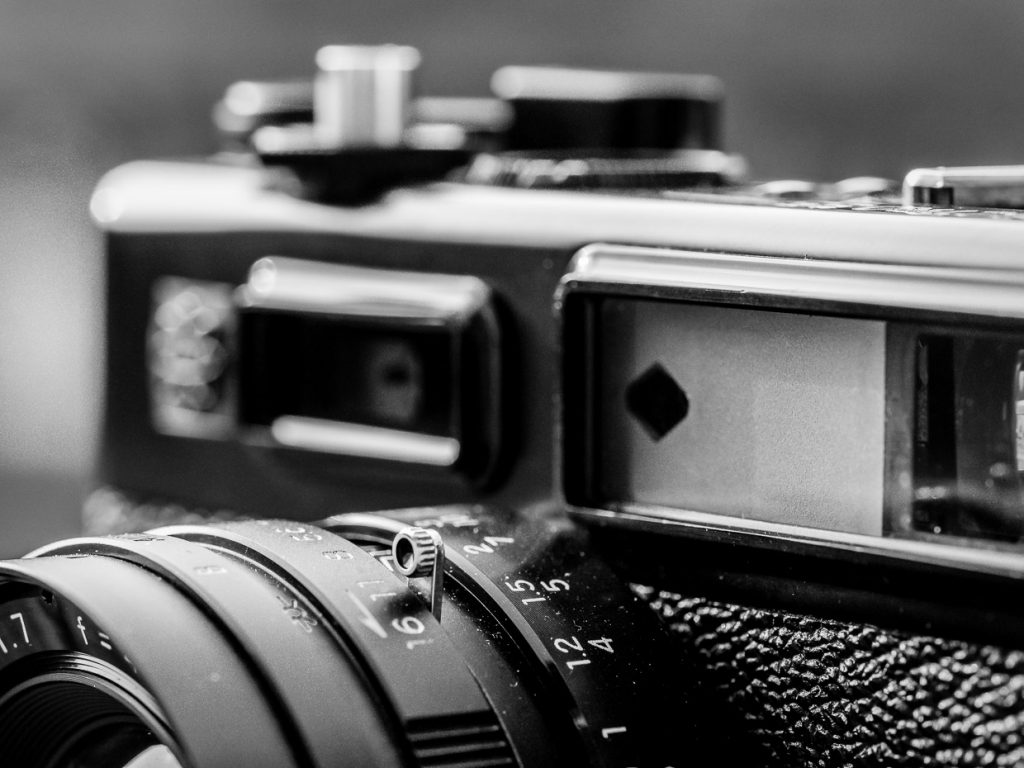


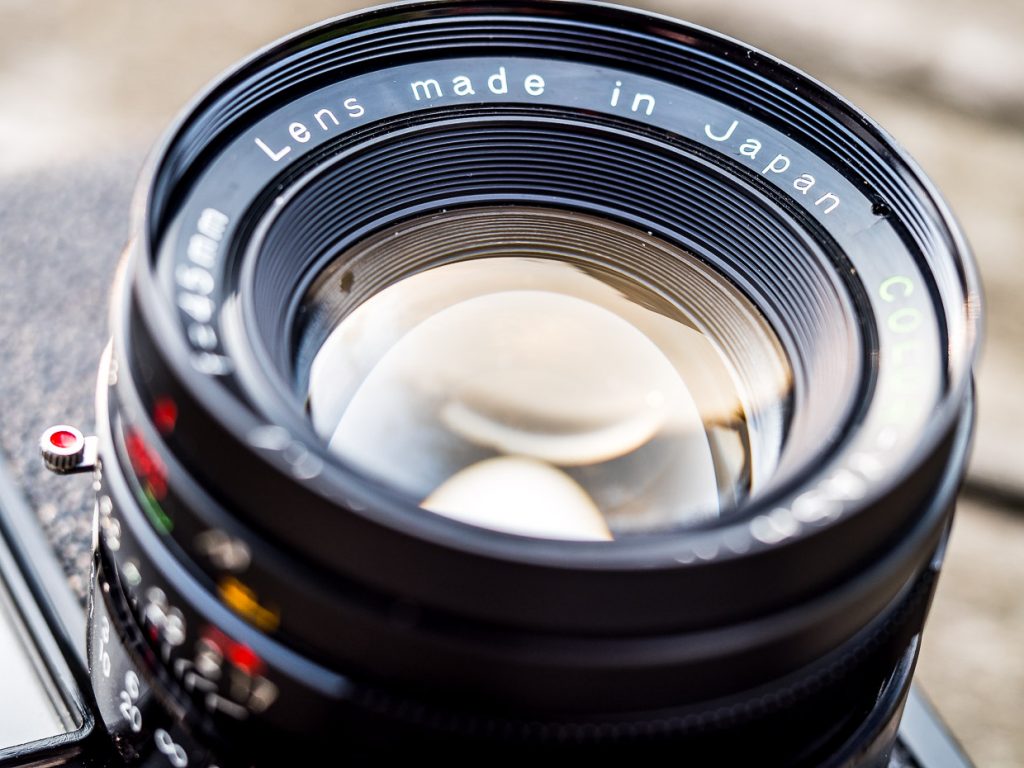


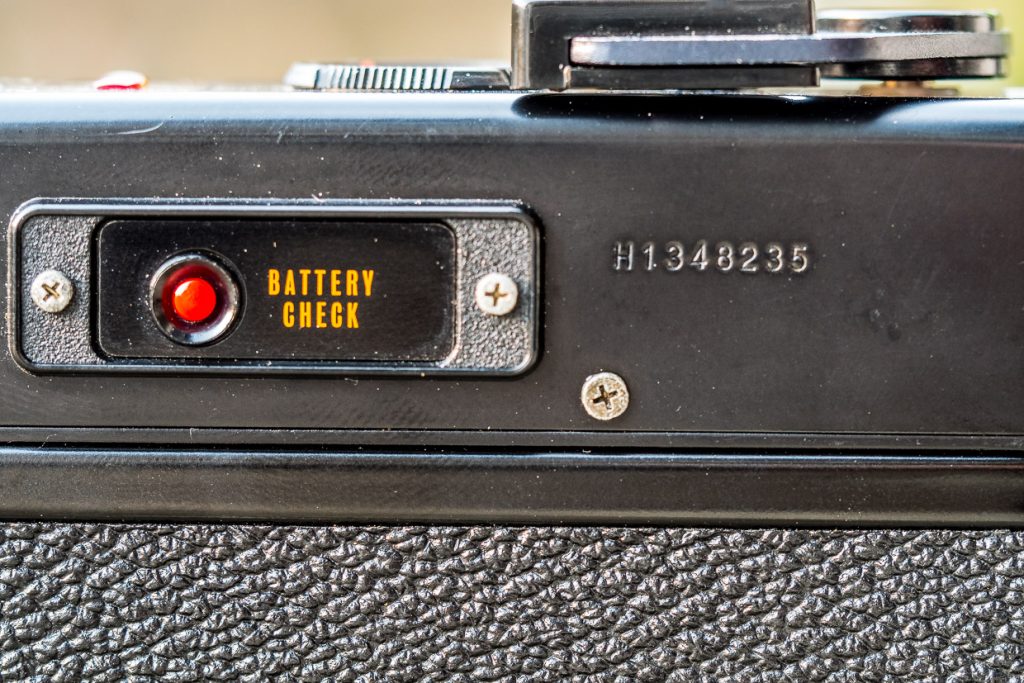
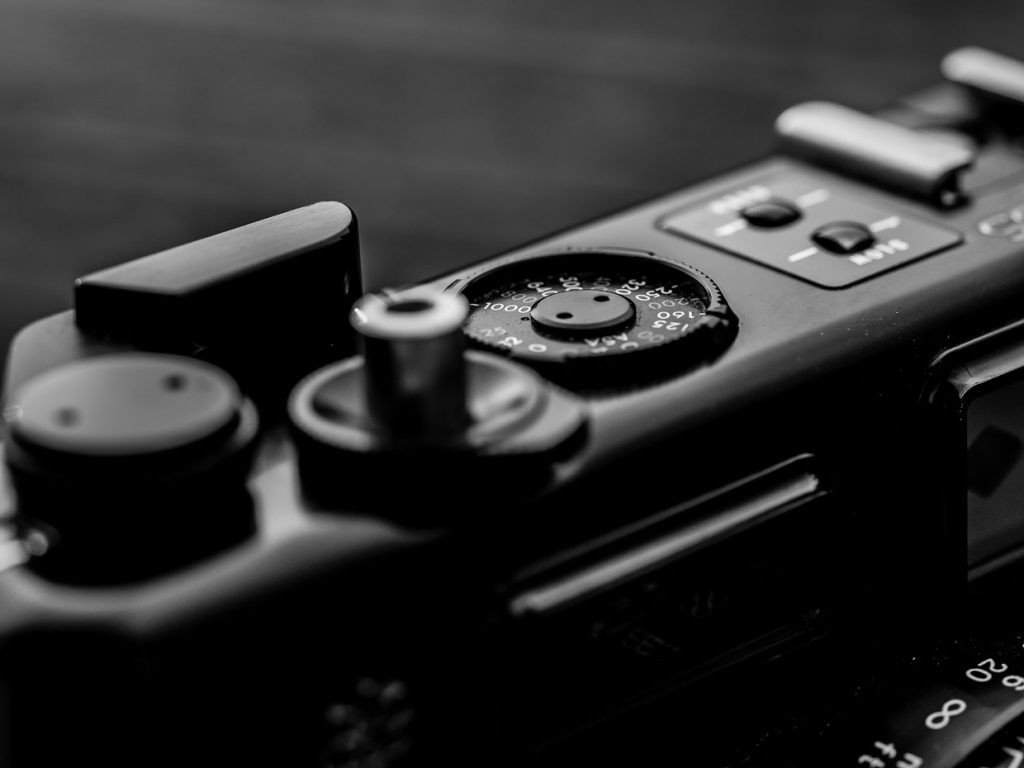


All in all, the Yashica Electro 35 line of rangefinder cameras, if in proper working condition, are outstanding cameras that, due to the large numbers produced, can still be found at very reasonable prices today.
Of course I needed to test my new rangefinder camera. I loaded an Ilford FP4 Plus 125 black and white film and inserted the battery with the adapter that came with the camera.


My shooting experience
To shoot, I had to select desired aperture ( f/1.7 – f/16) and focus with the rangefinder system. To check for a correct exposure, I needed to press the shutter release button halfway. If a red arrow appears in the viewfinder or the red lamp on the camera top is lit, I have to select a smaller aperture, as the image would be overexposed (even happened to me at 1/500 sec). A yellow/orange arrow or light indicates that the exposure time is longer than 1/30 s. In that case need to choose a larger aperture or think about using a tripod. Now a press of the button and the automatic aperture control takes over: The camera automatically selects the exposure time. If necessary, the camera exposes 16 to 30 seconds (allegedly even longer) at the smallest aperture.

In backlighting, the exposure meter has to be outwitted by selecting a lower film speed. There is no exposure compensation dial (this was quite normal for vintage rangefinders).


Also my test shots inside a bookstore came out well. With the aperture of f/1.7 and a 400 film this should also be a great camera to shoot inside without flash. With its near silent shutter, it also should work well in museums and at weddings. Due to the low depth of field, the camera is also great for portraits.


I had to wait two weeks for the developed film to be returned. When it finally came, I was really happy how my test shots with this 45 year old rangefinder camera came out. Although the eBay seller promised the camera is in near mint condition, it is always good to see that it really is fully functional.
But I still have to learn how to really handle this camera. There is no P-Mode, every single shot has to be focused and set up manually. And there is no way to immediately check the results. But it is definitely a relaxed and very decelerated way of doing photography, and a lot of fun! And when it’s dangling around your neck, it sure does draw some views, as this old rangefinder is a truly pretty camera.
All photos of the Yashica Electro 35 GTN were taken by me with the Olympus PEN-F and the mZuiko 17mm F/1.8, the macro shots with the mZuiko 60mm 1:2.8 Macro.
I hope you liked this trip into camera history!
Wish you a great start into the week!
Marcus
Related Posts:
Camera History – Konica Autoreflex T2