


Seville explored – Real Alcázar introduces you to the Royal Palace of Seville, Spain. The palace was originally constructed as a fortress during the 10th century by the Moors and has since been expanded and modified by various rulers and monarchs. An UNESCO World Heritage Site, it is considered one of the most important cultural landmarks in Spain. It has been used as a filming location for several movies and TV shows, including “Game of Thrones,” which featured the palace as the setting for the Water Gardens of Dorne. For its history and more photographs of its splendor, continue after the jump…


The history that happened here is truly fascinating. In the building to the right, the famous explorers of the 15th center like Christopher Columbus, Francesco Magellan and Amerigo Vespucci planned their voyages and secured the funds from the Catholic Kings (also known as the Reyes Católicos in Spanish). Isabella I of Castile and Ferdinand II of Aragon, who married in 1469 and ruled jointly the Kingdom of Castile and the Kingdom of Aragon in Spain from 1474 to 1504.
Isabella and Ferdinand were significant figures in Spanish history, as their reign marked the beginning of the modern Spanish state. They were known for their religious devotion and their role in the Reconquista, the campaign to retake Spain from the Moors.
One of their most significant achievements was the completion of the Reconquista, which ended with the fall of Granada, the last Muslim stronghold in Spain, in 1492. That same year, Isabella and Ferdinand sponsored the voyage of Christopher Columbus, which resulted in the discovery of the New World and the beginning of the Spanish colonial empire.
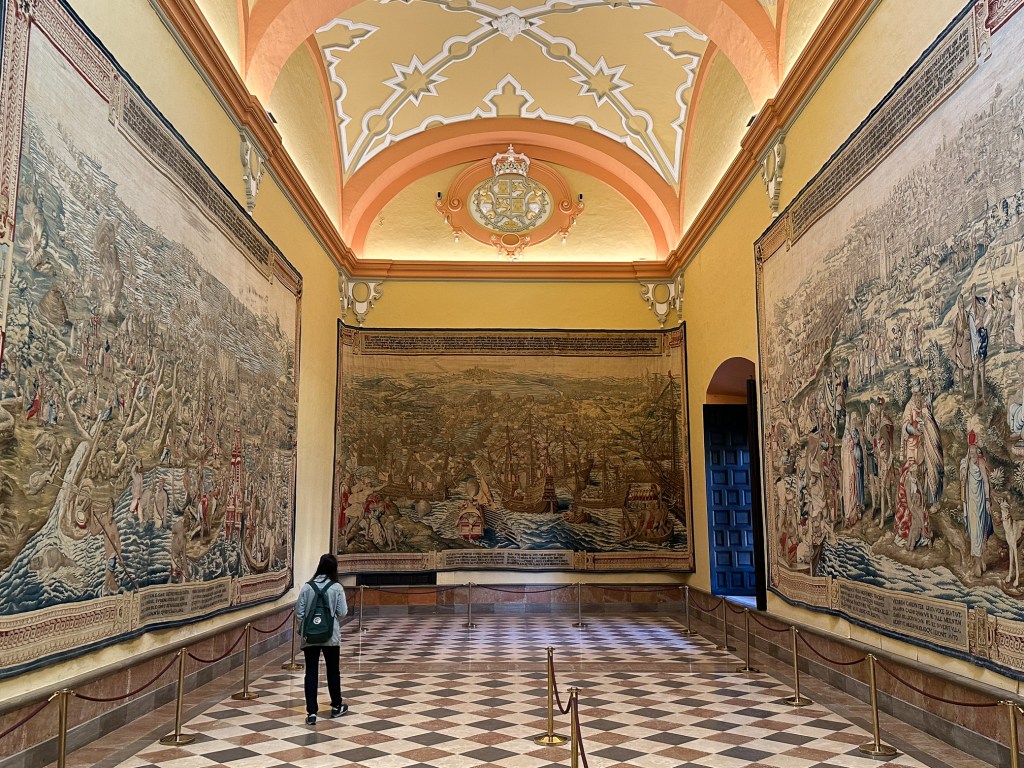


The entire palace is a stunning mixture of Christian and Moorish architectural styles, features many little courtyards with water basins for cooling in the heat of the Spanish summer.

As impressive are some of the accessible storage cellars under the old palace, as well as the underground baths of Lady María de Padilla.


The baths are named after Lady María de Padilla, a mistress of King Peter the Cruel, who was rumored to have used the chambers as her private bathing quarters.
The baths were originally constructed during the 14th century and are an impressive example of Mudéjar architecture, which combines Islamic and Christian design elements. The chambers feature a series of interconnecting vaulted rooms, which are supported by slender columns and arches.
The most striking feature of the baths is the intricate star-shaped skylights that allow natural light to filter into the underground chambers, creating a beautiful play of light and shadow on the walls and floors. The skylights are made of delicate alabaster, which creates a soft, diffused light in the otherwise dimly lit space.


The Alcazar is known for its unique blend of architectural styles, which includes Mudéjar, Gothic, Renaissance, and Baroque elements. One of its most notable features is the intricate tile work and plaster decoration found throughout the palace, which reflects the influence of Islamic art.


The Patio del Crucero is one of the most beautiful and iconic courtyards in the Royal Alcazar of Seville. The courtyard is located in the northern part of the palace complex and serves as a central hub that connects various parts of the palace.
The Patio del Crucero is known for its stunning Gothic architecture and intricate tile work. The centerpiece of the courtyard is a beautiful fountain, which is surrounded by a marble balustrade and ornate arches. The courtyard also features several large palm trees, which add to its tropical ambiance.


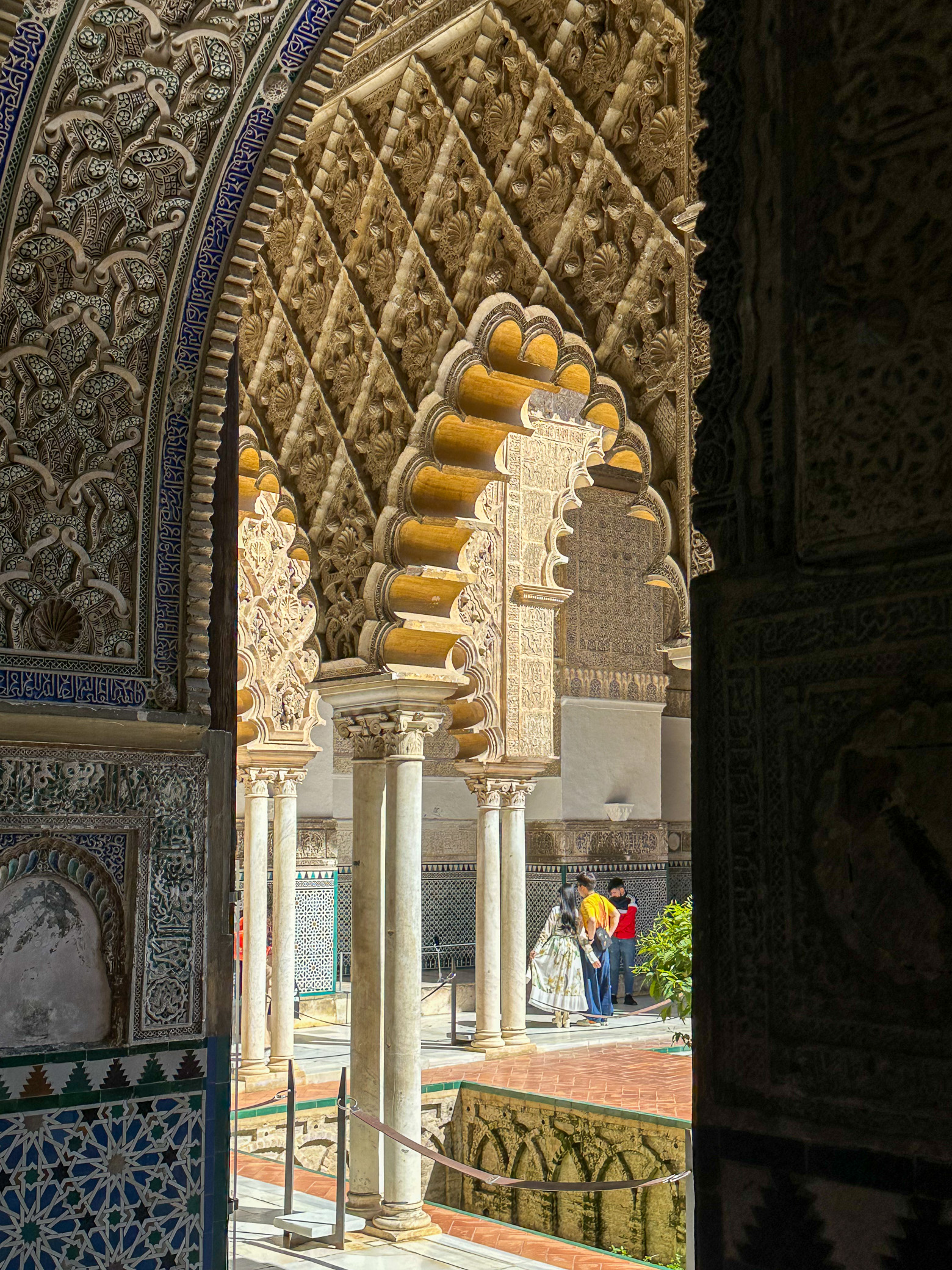
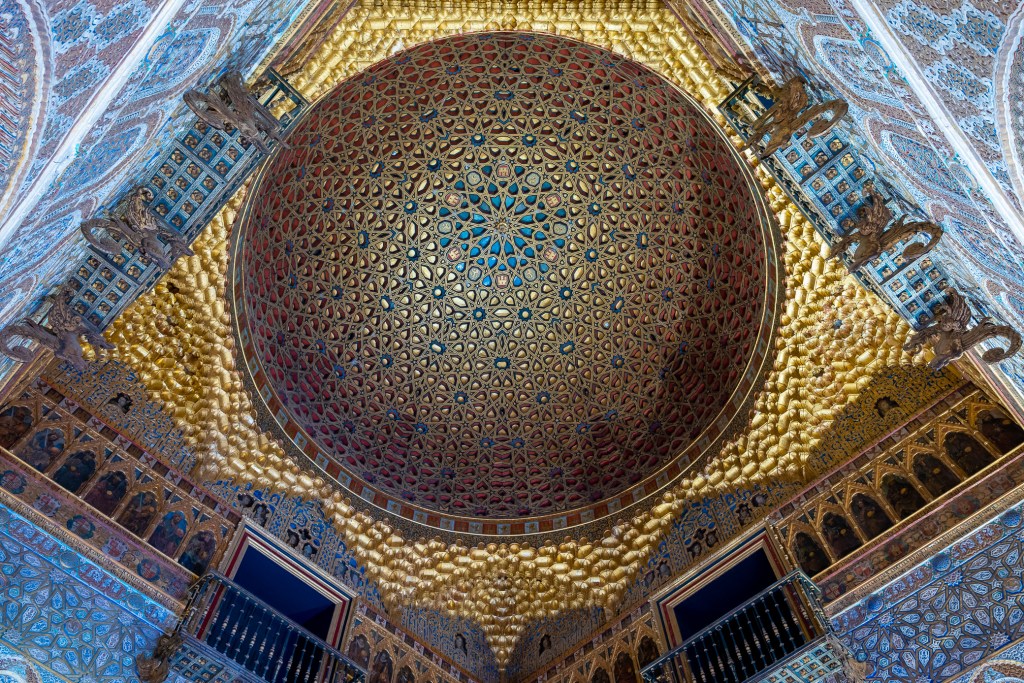


The splendor of the Royal Alcázar is breathtaking, and was most definitely a highlight for The Significant other and I during our visit to Seville. I hope you enjoyed the little tour through the palace as well.
I took the photographs mainly with my Leica SL2-S and the Vario-Elmarit-SL 1:2.8/24-70 ASPH. Post-processing in Lightroom Classic.
Have a great Thursday!
Marcus
Related Posts:
Seville Explored – Setas de Sevilla