Weekly Photo Challenge: Serene

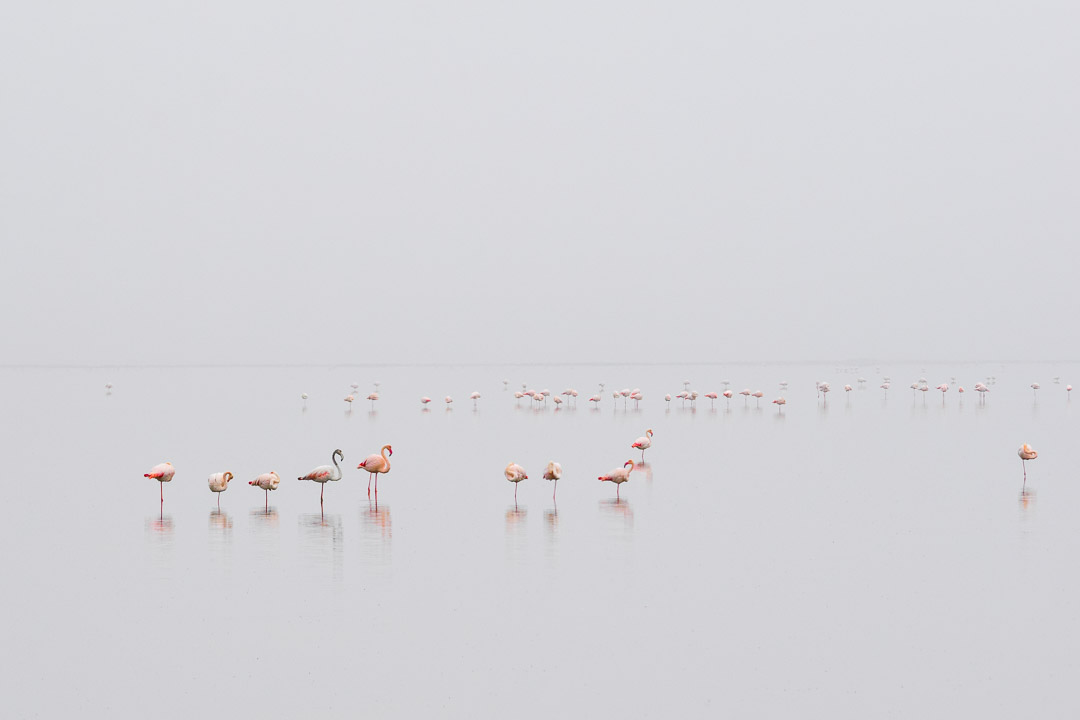
Pink Serenity
Pink Serenity | Namibia | 2017

Rarely has the theme of the Weekly Photo Challenge from Word Press’ The Daily Post hit a nerve with me more as this week with “Serene“.

I’m totally in need of some serenity. The job that pays the bills has completely taken over my life, add in some special topics as the upcoming move of my big girl and the typical pre-festive season stress, another upcoming ten day business trip across the big ocean, and you can imagine why I would absolutely love to jettison myself out of reality and to a serene place like the lagoon of Walvis Bay in Namibia with its Flamingo swarms. Obviously bringing my camera.

Getting to some photography and even blogging has been a bit of challenge the past days, as well as answering comments and checking out posts from the blogs I follow, so apologies for not being present as much as I want to be.

The serene scene above was taken with my Olympus OM-D E-M1 with the mZuiko 40-150mm F/2.8 Pro Zoom. Image specs 1/1600 secs @ f/5.6 and ISO 200, focal length was 150mm (300mm full frame equivalent). The photo is pretty much out of cam, aside from slight cropping.

I wish everyone a great Thursday!

Marcus

Related Posts:

Namibia Explored – Sandwich Harbor

Instant Inspiration (16) – Dusk at the Ocean

Where the river meets the ocean

Instant Inspiration (15) – Long Exposure Waterscapes

Weekly Photo Challenge: Transformation

Ghost Town
Ghost Town | Namibia | 2017

Transformation is something affecting all of us constantly. It is also the title of the Weekly Photo Challenge  Jen H. from Word Press’ “The Daily Post” has given us for this week. Transformation is very visible outside our windows here in Germany, as the strong autumn storms are blowing the last leaves from the trees and nature readies itself for another winter.  Managing transformation processes is also an integral part of my professional life and the job that pays the bills.

Peter Iredale
Peter Iredale | Oregon | 2017

My take on the challenge this week is the decay of man made structures as they are slowly recaptured by nature and transformed to rubble and dust.

Like the wooden buildings of the diamond ghost town Kolmanskoop. slowly but steadily blown to pieces by the high winds of the Namib Desert or swallowed up by the passing dunes. Or like the iron remnants of the more than one hundred years old sailing vessel “Peter Iredale” on the Oregon coast, that are gradually being dissolved by microorganisms and through the forces of the great Pacific Ocean.

To all my American friends I wish a very happy and peaceful Thanksgiving!

Everybody else have a great Thursday 🙂 !

Marcus

Related Posts:

Weekly Photo Challenge: Elemental

Weekly Photo Challenge: Wanderlust

Namibia Explored – Diamond Ghost Town

Where the river meets the ocean

Road to Berlin

Road to Berlin
Road to Berlin | Germany | 2017

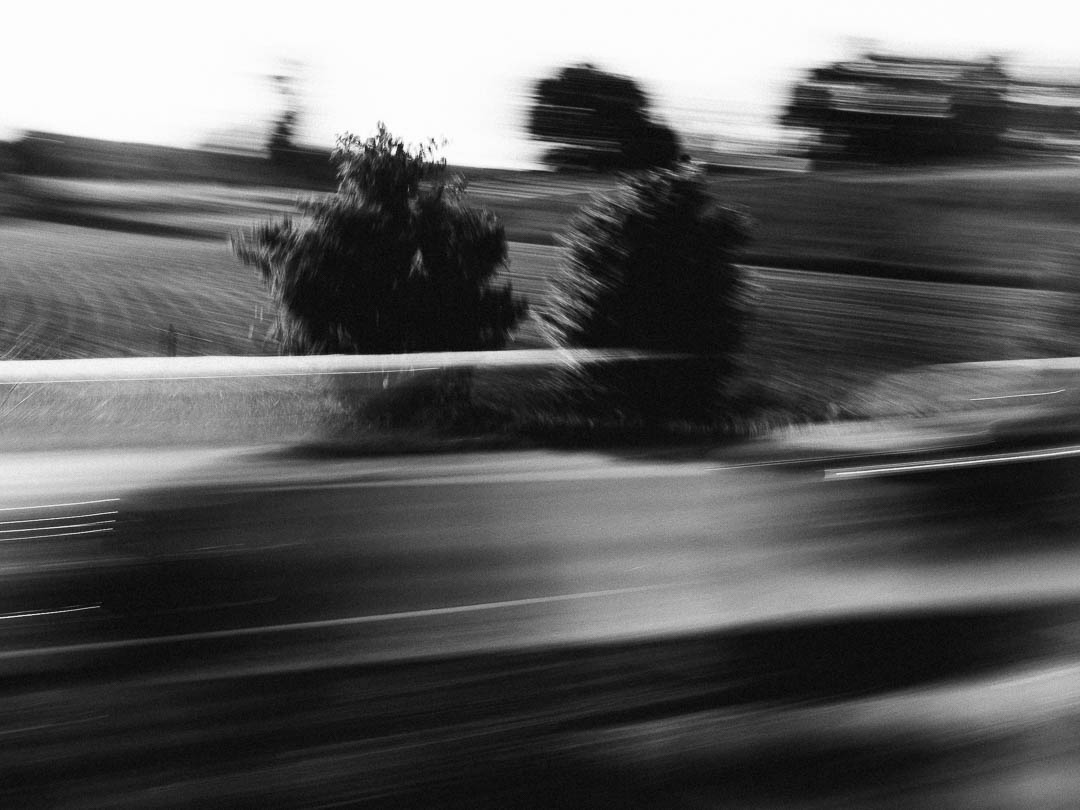
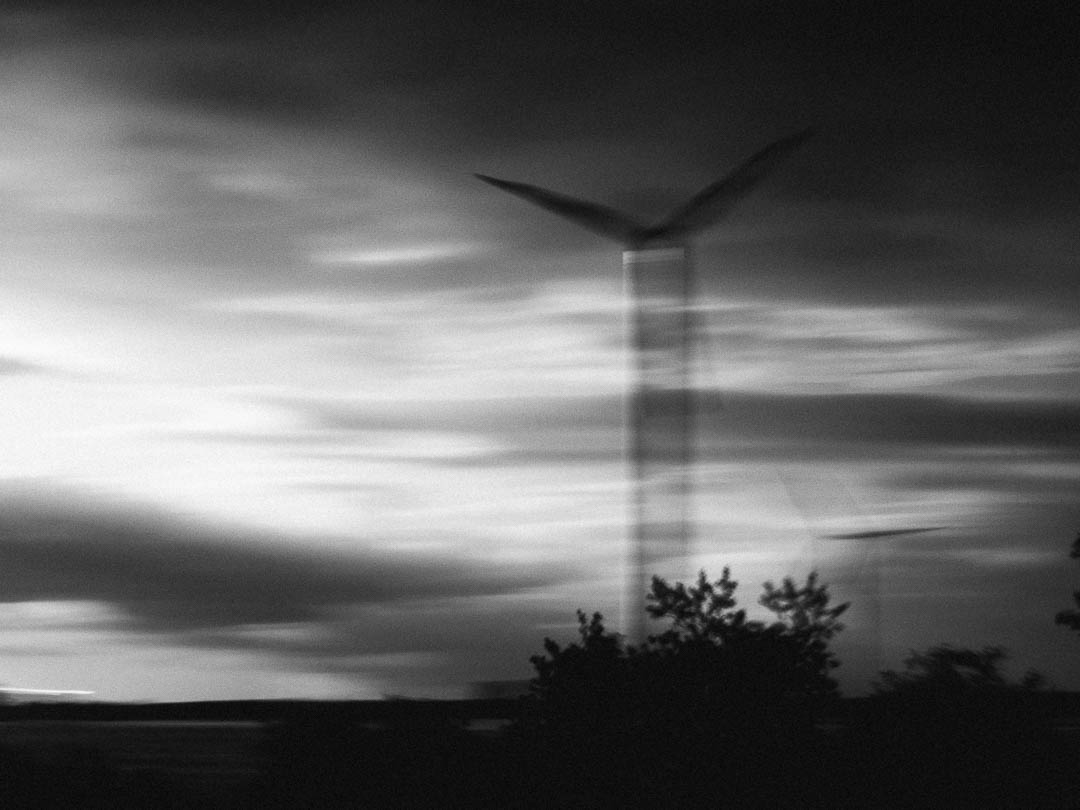
Before heading back to the Pacific Northwest before sunrise on Monday morning, the significant other and myself took the road for our Nation’s Capital on Friday afternoon to visit close friends, do some shooting and shopping in the city  and attend a Whiskey tasting I got as present for my 50th birthday back in January. The photographs shown here are taken out of the moving car in a combination of slow shutter speeds (both were shot at 1/13 sec) and panning the camera backwards against the driving direction. The conversion to monochrome was done in Lightroom CC with the pre-set mimicking a TRI-X analogue film.

Wind Song
Wind Song | Germany | 2017

For more tips and inspirations published on the Streets of Nuremberg visit my free Learning Center.

Have a great weekend!

Marcus

Related Posts:

A Capital Sunset

House of Blue and Gold

You see me

Namibia Explored – Etosha Wildlife

Out of my way

Highlight of any Namibia trip is a visit to Etosha National Park. Founded in already in 1907, the Park spans an area of 22,270 square kilometres (8,600 sq mi) and gets its name from the large Etosha salt pan which is almost entirely within the park.  The park is home to hundreds of species of mammals, birds and reptiles, including several endangered species such as the black rhinoceros. Besides the salt pan there are also areas of grass land, dry- and thorn-savannah. The wildlife is abundant, and especially in the dry season concentrated around the water hole. You can self drive through the park, mostly on gravel roads. There are several rest areas and camps distributed throughout the park where one is also allowed to leave the car.

Personally I find it super relaxing and almost meditative to slowly drive through the park, and just see what surprises nature has in store. Wildlife is not calculable, so some days you get really lucky, others there is not much to see. But the great thing is that anytime, around every corner, every thorn bush, the next amazing wildlife experience can wait for you.  To see what we encountered in Etosha National Park, continue after the jump…. Continue reading “Namibia Explored – Etosha Wildlife”

Namibia Explored – Elephants of Etosha

Meet the Team
Meet the Team | Etosha | 2017

One of the very highlights of our three-week journey through Namibia came at the very end, with the visit to Etosha National Park. Doing Safari in the African bush is always an exhilarating experience, seeing the wildlife up close and in their natural habitat. We’ve travelled to many national parks in Southern Africa over the years, and they all have their own beauty. What makes Etosha special is the abundance of elephants, appearing in big groups, which we never saw before. For some elephant impressions continue after the jump…. Continue reading “Namibia Explored – Elephants of Etosha”

Namibia Explored – Twyfelfontein

Twyfelfontain Carvings04
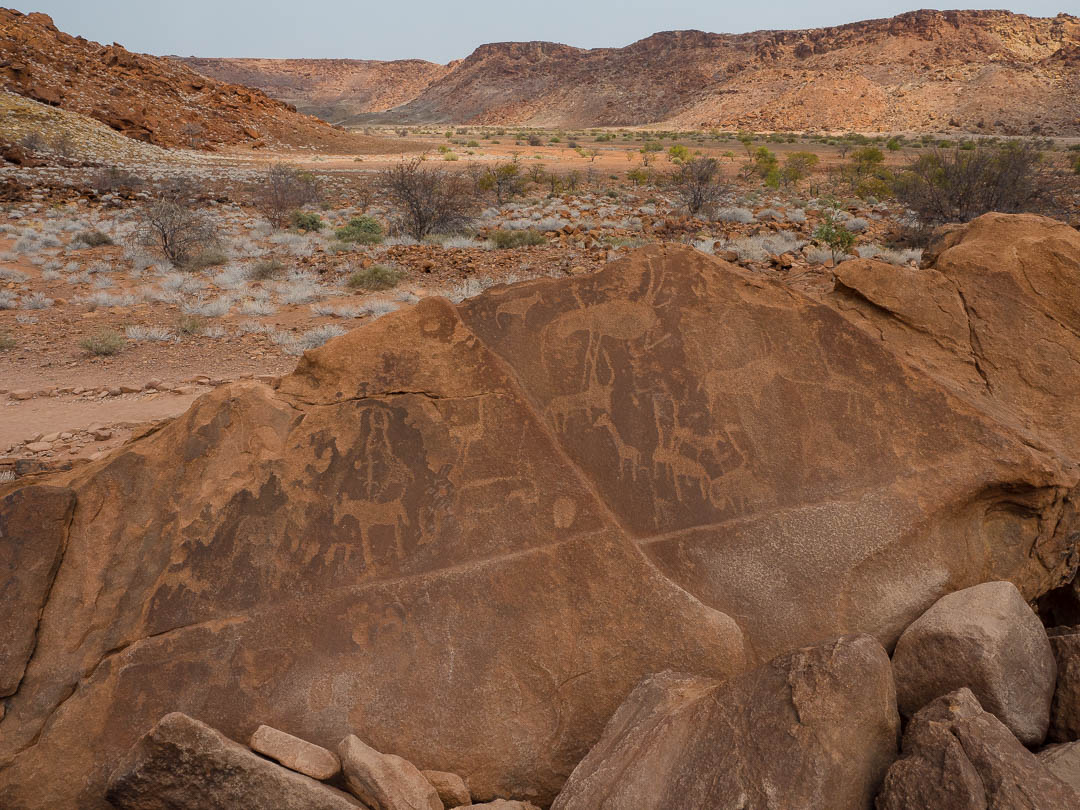
Twyfelfontein | Namibia | 2017

The last stop before finishing our memorable Namibia vacation in Etosha National Park was at a veritable UNESCO World Heritage Site, the world-famous stone-age rock engravings of Twyfelfontein in the Kunene region of north-western Namibia. For more photographs and info about this fascinating place, a glimpse of a petrified forest, some more roadside giraffes and another African sunset photo continue after the jump…

Continue reading “Namibia Explored – Twyfelfontein”

High Key Wilderness

Etosha Animals HeyKey Panorama 03
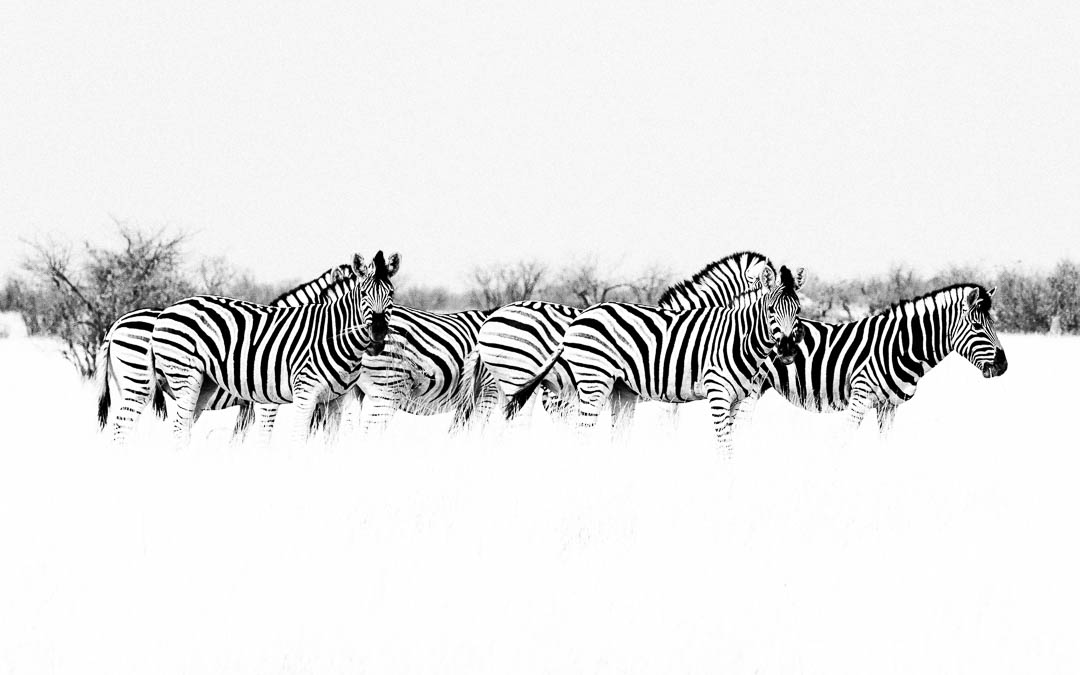
Zebras in Etosha | Namibia | 2017

Somehow I have a hard time transitioning back to Street Photography, so here find another Africa post. While  sorting through my Namibia photos and selecting the ones I want to include in the photo book of our vacation, in a calendar etc…. I was also playing around with animal images I could convert to monochrome. I have a high key preset in Lightroom that I wanted to try out on panoramic groups of animals I photographed in Etosha National Park with my Olympus OM-D E-M1 with the mZuiko 40-150mm F/2.8 with the MC-14 Tele-Converter that increases focal length by factor of 1.4 . The Lightroom adjustments basically include increasing exposure and playing with the grad curves, were I increased the light midtowns and turned down the dark midtowns, to get that high key effect. I also increased the contrast and the clarity. To see more monochrome Etosha wilderness photos continue after the jump….

Continue reading “High Key Wilderness”

Namibia Explored – Erongo Mountains

Sleeping Giraffe
Sleeping Giraffe | Namibia | 2017

A big giraffe sleeping all curled up like a dog? Are you kidding me? But look for yourself! If you want to find out if this really was a sleeping giraffe, and to read about our lonesome but fascinating hike to a cave up in the Erongo mountains were we found bushmen’s paintings and and carvings presumed to be more than five thousand years old, continue after the jump…. Continue reading “Namibia Explored – Erongo Mountains”

Namibia Explored – Cape Cross

Cape Cross 07
Cape Cross | Namibia | 2017

It’s travel day! We’re sitting at Windhoek Airport awaiting our flight back home to Germany after three magic weeks in Namibia.

While waiting for boarding I want to share the next episode of my “Namibia Explored” series, our trip from Swakopmund to Cape Cross.

Cape Cross actually has two major attractions, one of which heavily relates to Nuremberg.

To find out what it is and see some more photos of a colony of 250.000 seals continue after the jump….

Continue reading “Namibia Explored – Cape Cross”

Namibia Explored – Sandwich Harbor

Sandwich Harbor 02
Atlantic Ocean Dunes | Namibia | 2017

If you are an internet junkie, Namibia might not be the perfect place for your vacation. We had no web connection for more than a week, since leaving Swakopmund. We are currently in Etosha National Park in the north of Namibia, almost at the end of our three week Namibia vacation. So far it was a magic trip. But with my posts about Namibia I want to stay in sequence, so today I want to show you photos of a trip to the high sand dunes of Sandwich Harbor, where the Namib desert meets the cold waters of the South Atlantic Ocean.

We booked a day trip from Swakopmund with Turnstone Tours (as always, the included links are just for your reference, because I really liked the service, and I did not receive any benefits from posting the links). With our tour guide/driver Burger (hey Burger, if you ever read this, thanks for a super great day!!) we took of at 8:30 am from Swakopmund and drove down to Walvis Bay. On the 1.400 kilometers of Namibian coast line, there are only two natural harbors, Luderitz Bay and Walvis Bay, the rest is barren coast, with no fresh water and plenty of fog, appropriately named the “Skeleton Coast”. First stop was the Walvis Bay Lagoon, where we had beautiful views of the resident Flamingo population. For all the infos and the photographs of our great dune adventure continue after the jump…. Continue reading “Namibia Explored – Sandwich Harbor”

Sunset at the end of the road

African Sunset
African Sunset | Swakopmund | 2017

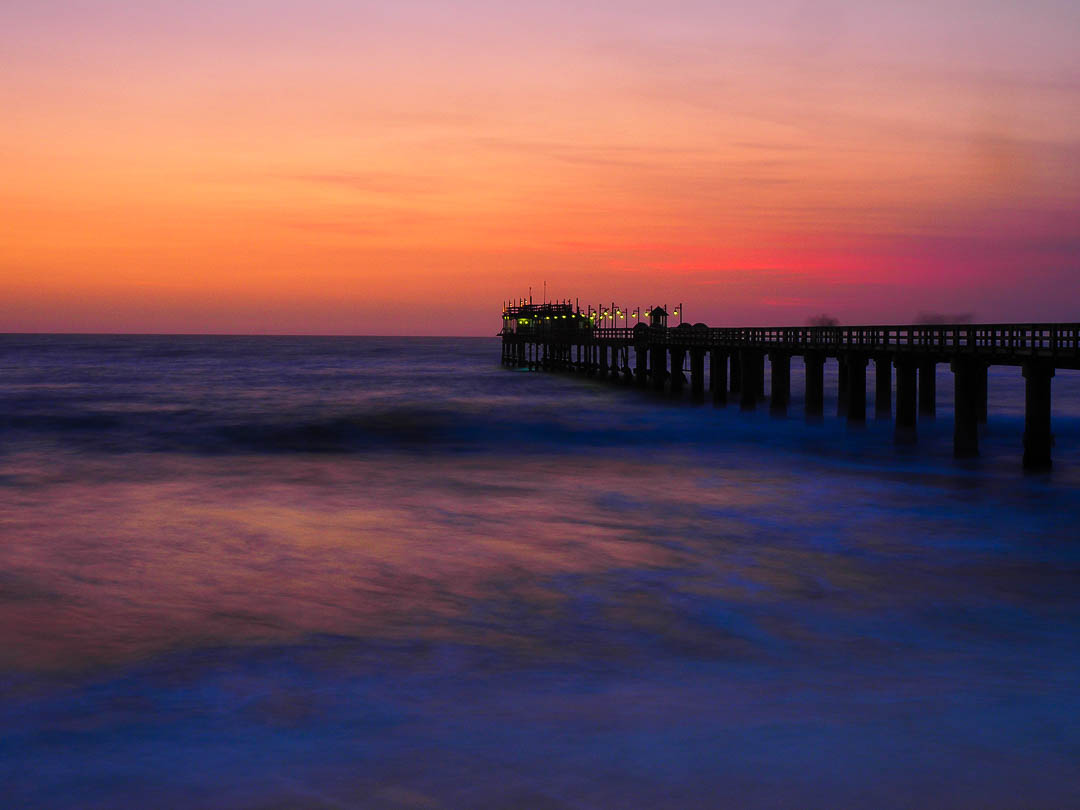
Driving on African gravel roads is tiring. The landscape around you is fantastic, bit keeping the car steady on the gravel or sandy roads takes a lot of effort, you can never drive on “autopilot”. After a 380 kilometer and 6 hour trip on unpaved roads we arrived at the coastal town of Swakopmund. After checking into our B&B we went straight to the historic jetty to experience the African sunset behind the Southern Atlantic Ocean.

Despite having a coastline of 1400 kilometers, Namibia has only two natural ports, Luderitz Bay in the south and Walvis Bay just 30 kilometers south of Swakopmund. As Luderitz was limited to the diamond mining operations and had no real access to the rest of the country due to being isolated by the Namib desert, and Walvis Bay was British, the German colonial authorities founded Swakopmund as a city that had at least some access too fresh water and decided to built a Jetty in 1905 to help the unloading of cargo from ships and support the settling activities. At the Ocean end of the Jetty is a great restaurant where we enjoyed a great fish dinner after getting the obligatory sunset pictures first.

The Ocean waves where impressive, as was the colors of the sky after the sun went down behind the great Oceans waves. I wanted to create a long exposure image of the waves, creating that dreamy effect. In order to achieve the longest possible exposure time I set the PEN-F to its smallest aperture of f/22 and the lowest native ISO of 200, resulting in a 6 second exposure time, long enough to create what I was after.

To keep it simple, I did not attach any filters, and neither I used a tripod. I simply set the camera on on of the rocks between the road and the beach and used a 2 second self timer to avoid any camera shake after pressing the shutter.

The photograph is a jpg out of camera, no postprocessing was applied.

Have a great Friday!

Marcus

Related Posts:

Namibia Explored – Sossusvlei


Namibia Explored – Sossusvlei

Dancing Trees
Dancing Trees | Namibia | 2017

Surely on of the highlights of every Namibia trip is a visit to  Sossusvlei, a salt pan  surrounded by high red dunes, located in the Namib-Naukluft National Park. The name Sossusvlei can be translated with “dead-end marsh”. Sossusvlei is the final drainage basin for the Tsauchab river, who ends here and will never see the coast of the Atlantic Ocean. To find out more about this fascinating natural marvel in the Namib desert continue after the jump… Continue reading “Namibia Explored – Sossusvlei”

Up ↑