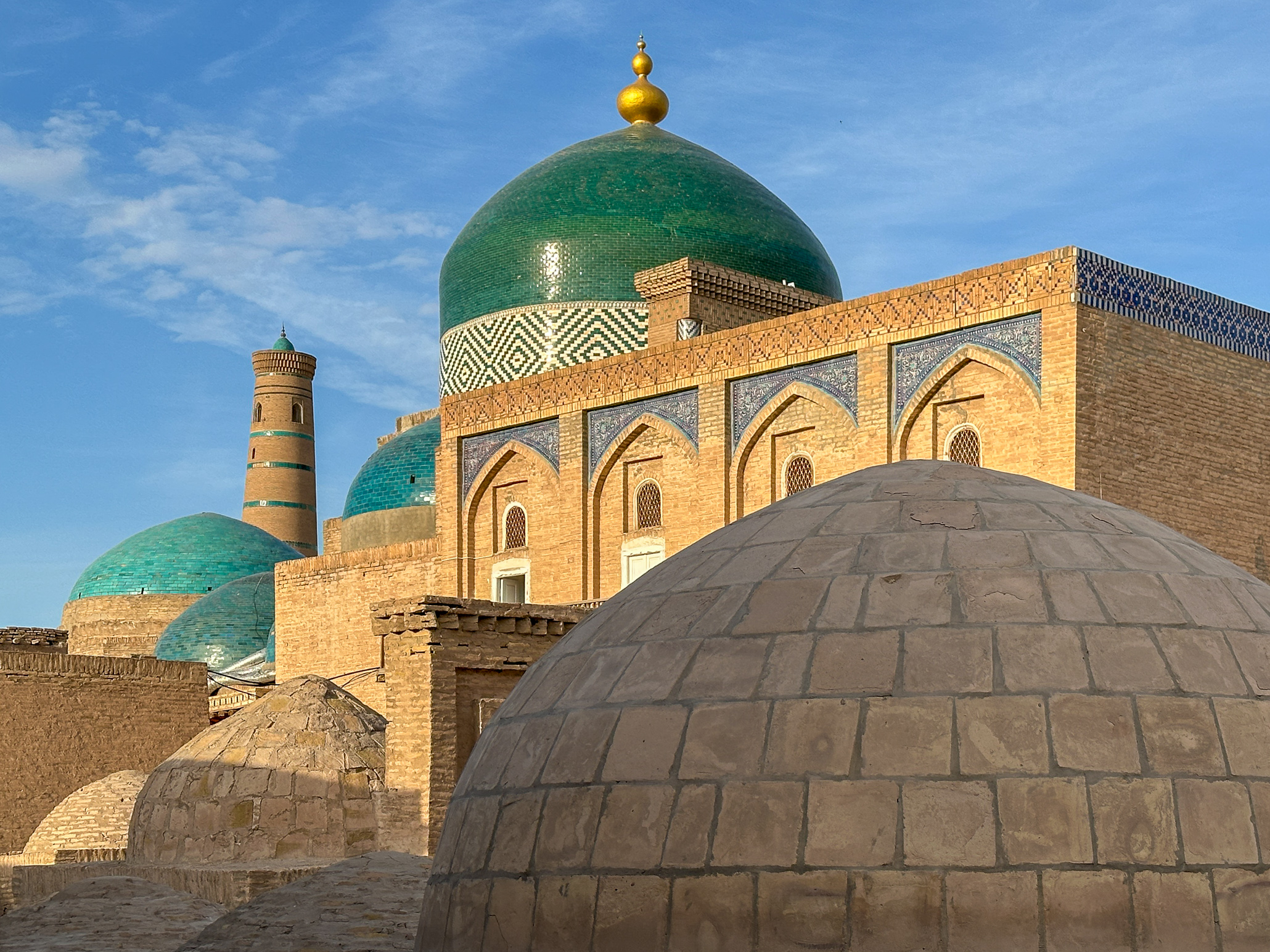
A few weeks ago, at the end of May, The Significant Other and I went on a 10 day trip to Uzbekistan. Since my teen years I wanted to tour the magic cities along the Silk Road that I read about in the adventures of Venetian merchant Marco Polo. With Khiva, Bukhara, Shakhrisabz, Samarkand and Tashkent we visited five Unesco World Heritage Sites along the ancient trade route between China and Europe. This post in my series “Uzbekistan explored” takes you along to a place that feels like it’s been untouched for centuries. But that’s exactly how it felt the moment we stepped through the gates of Khiva, the desert city in the far west of Uzbekistan, rising out of the stark beauty of the Kyzylkum Desert. An ancient Silk Road oasis frozen in time.
A City Steeped in History
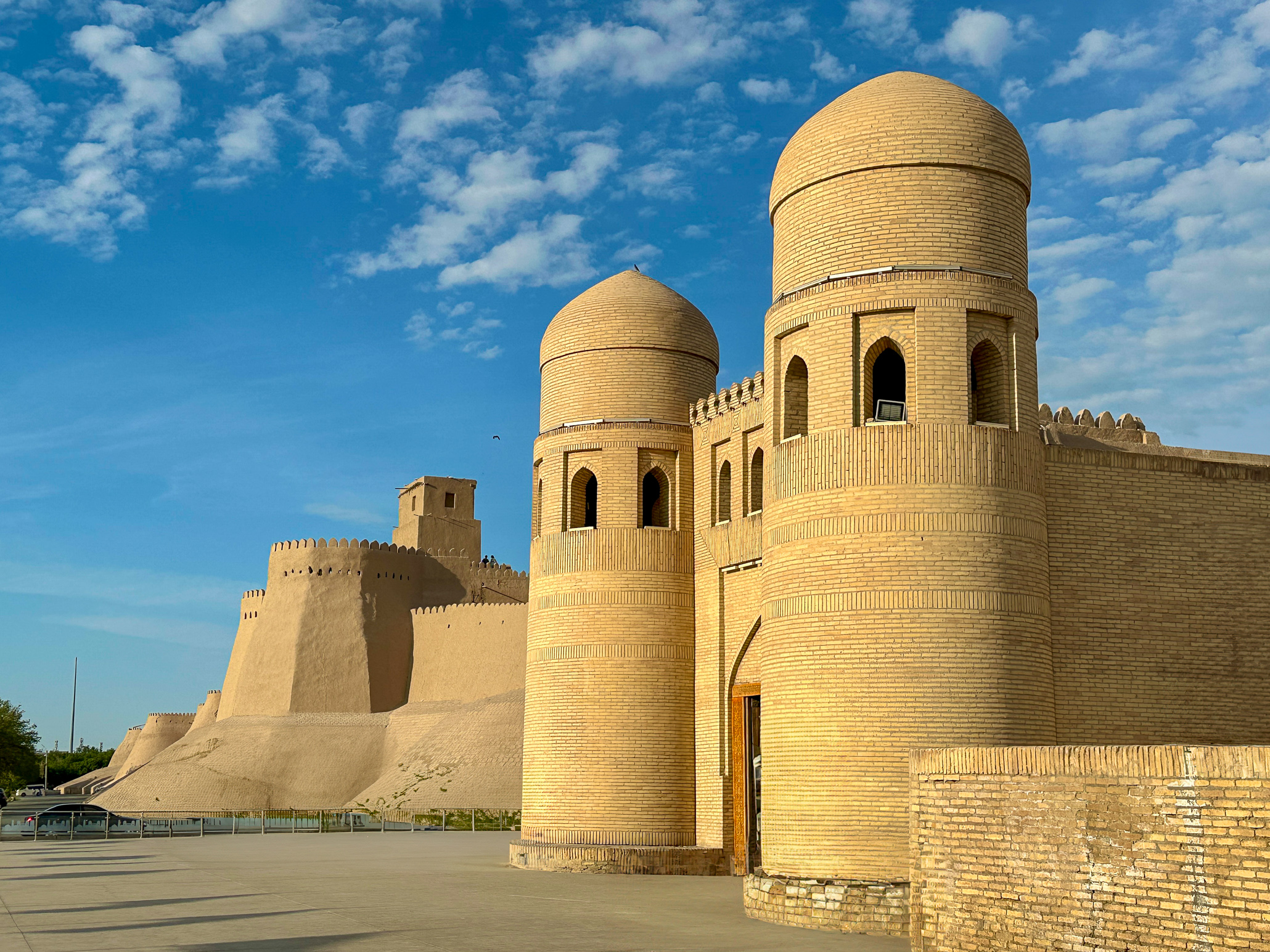
Khiva’s history stretches back over 2,500 years, although it wasn’t until the 16th century that it rose to power as the capital of the Khanate of Khiva. Back then, it was a powerful city-state, a hub of trade and craftsmanship, known both for its opulence and its darker role in the slave trade.
The khans ruled behind towering walls, and the narrow alleys buzzed with life: carpet weavers, blacksmiths, poets, and theologians. When the Russian Empire finally absorbed the region in the late 1800s, Khiva’s independence faded, but its architecture and spirit somehow remained intact. Today, that legacy is beautifully preserved inside the city’s Itchan Kala, the ancient inner fortress and a UNESCO World Heritage Site.

Into the desert city
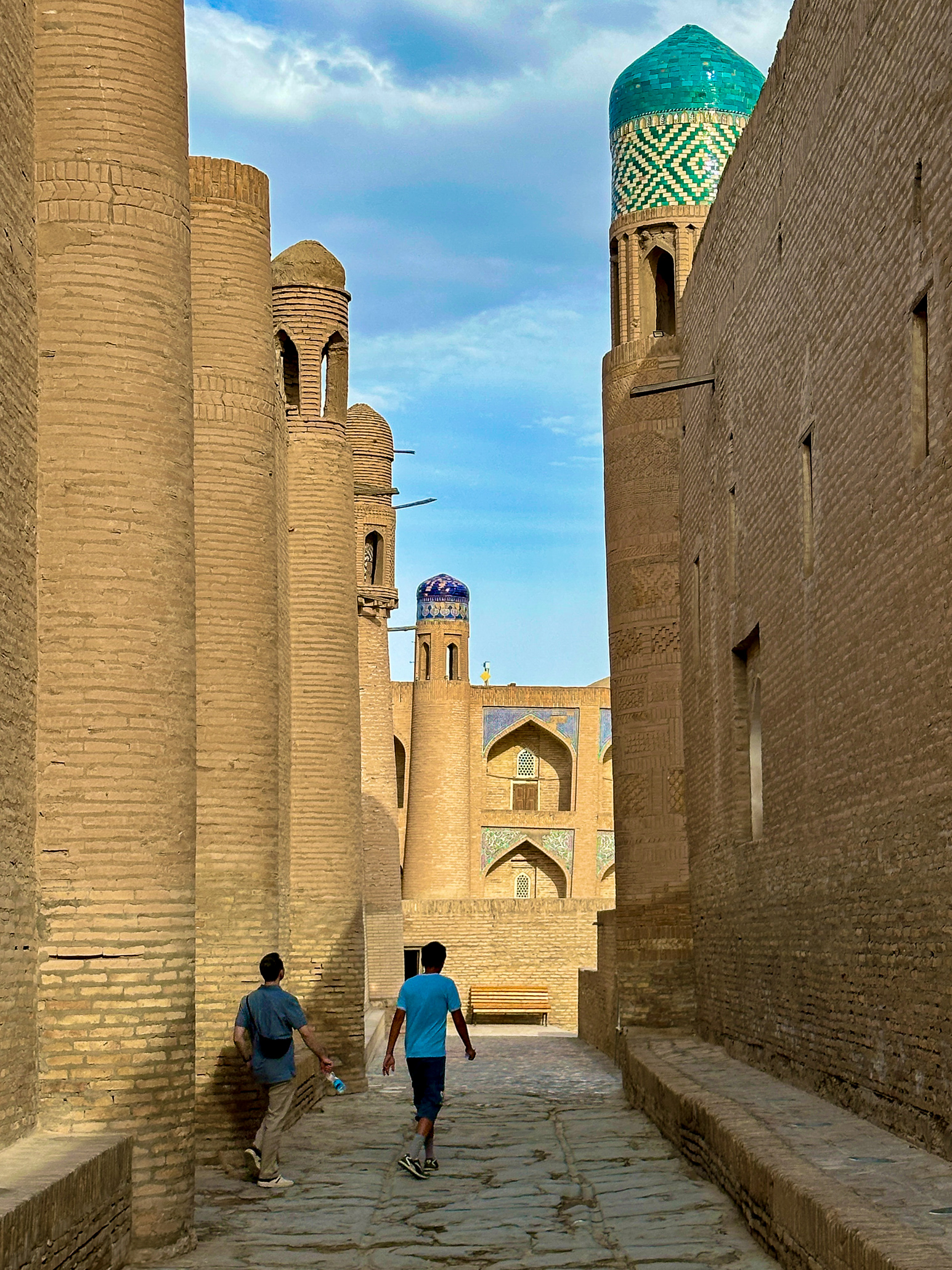
The first time we walked through the massive city gate of the Itchan Kala, we felt like we’d crossed into another century. The mudbrick walls—ten meters high—stretched around us, cradling a maze of madrasahs, mosques, and palaces. What’s striking is how compact and walkable the old town is. Every corner holds a surprise and opens new wonderful perspectives on this ancient desert city.
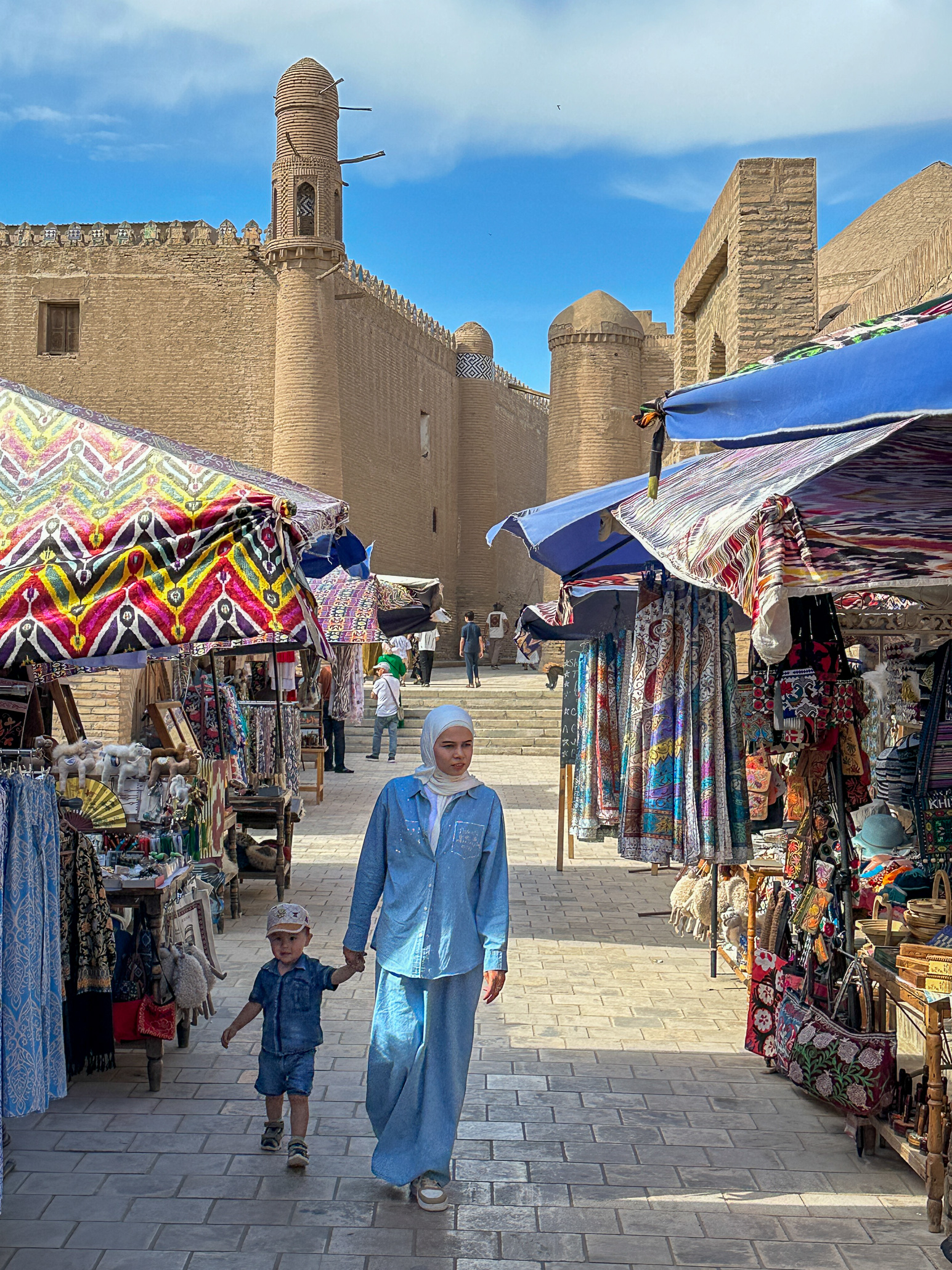
On the western side of the old town lies the Kunya Ark, the royal fortress built in the 17th century. Inside its walls, we wandered through sun-baked courtyards, a harem complex, and a tiny mint where coins were once cast.
Tash Khauli Palace
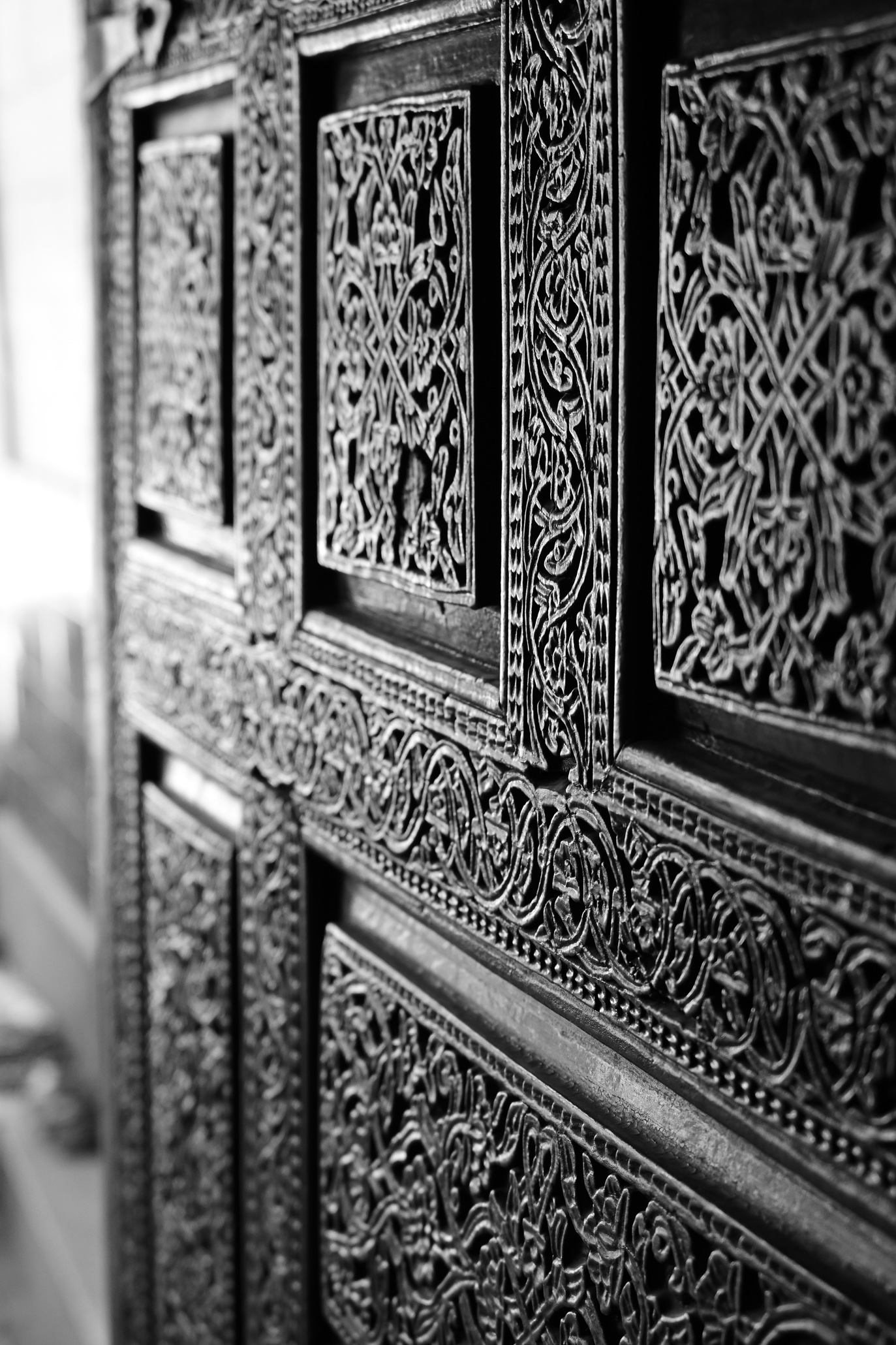
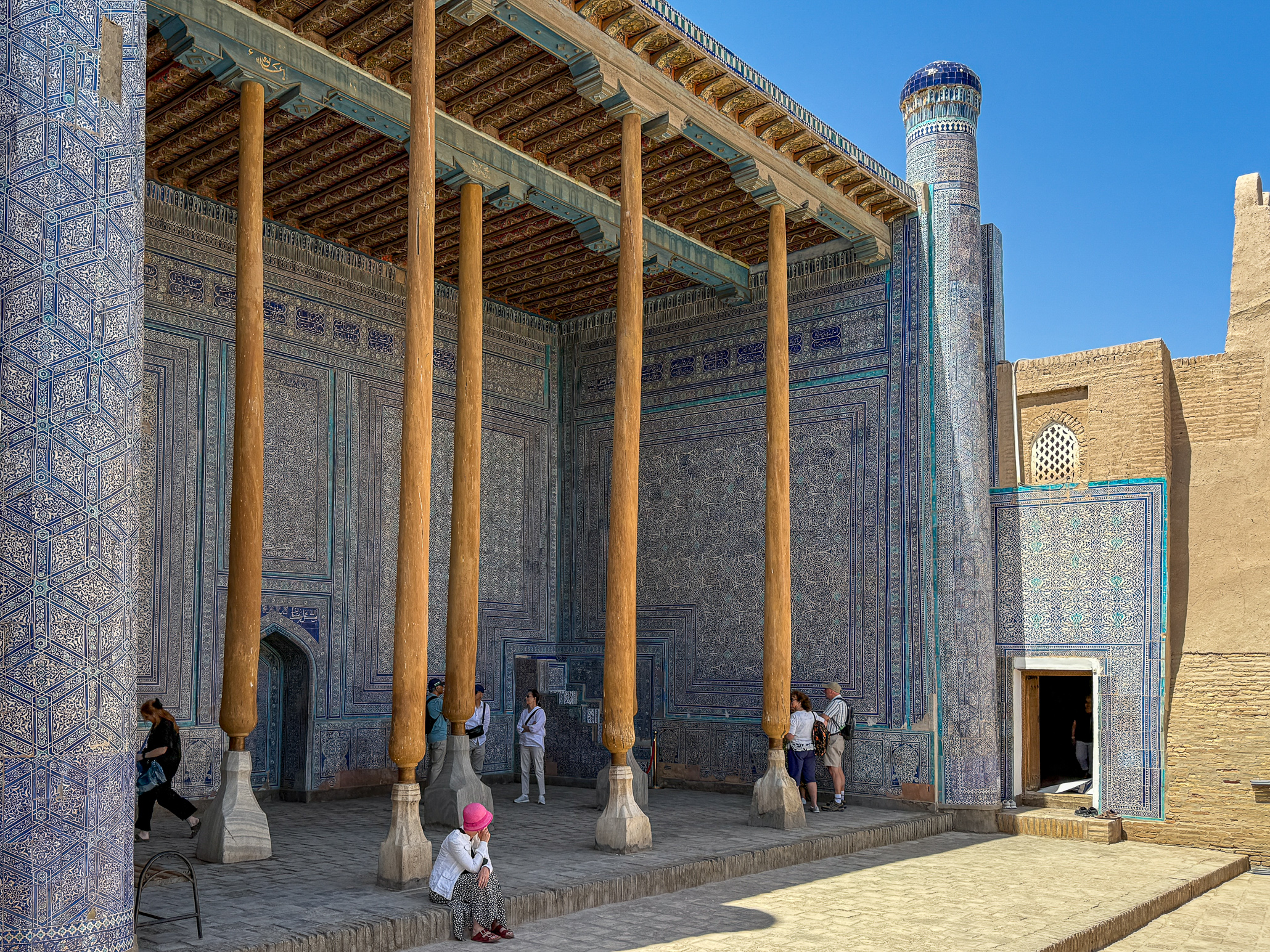
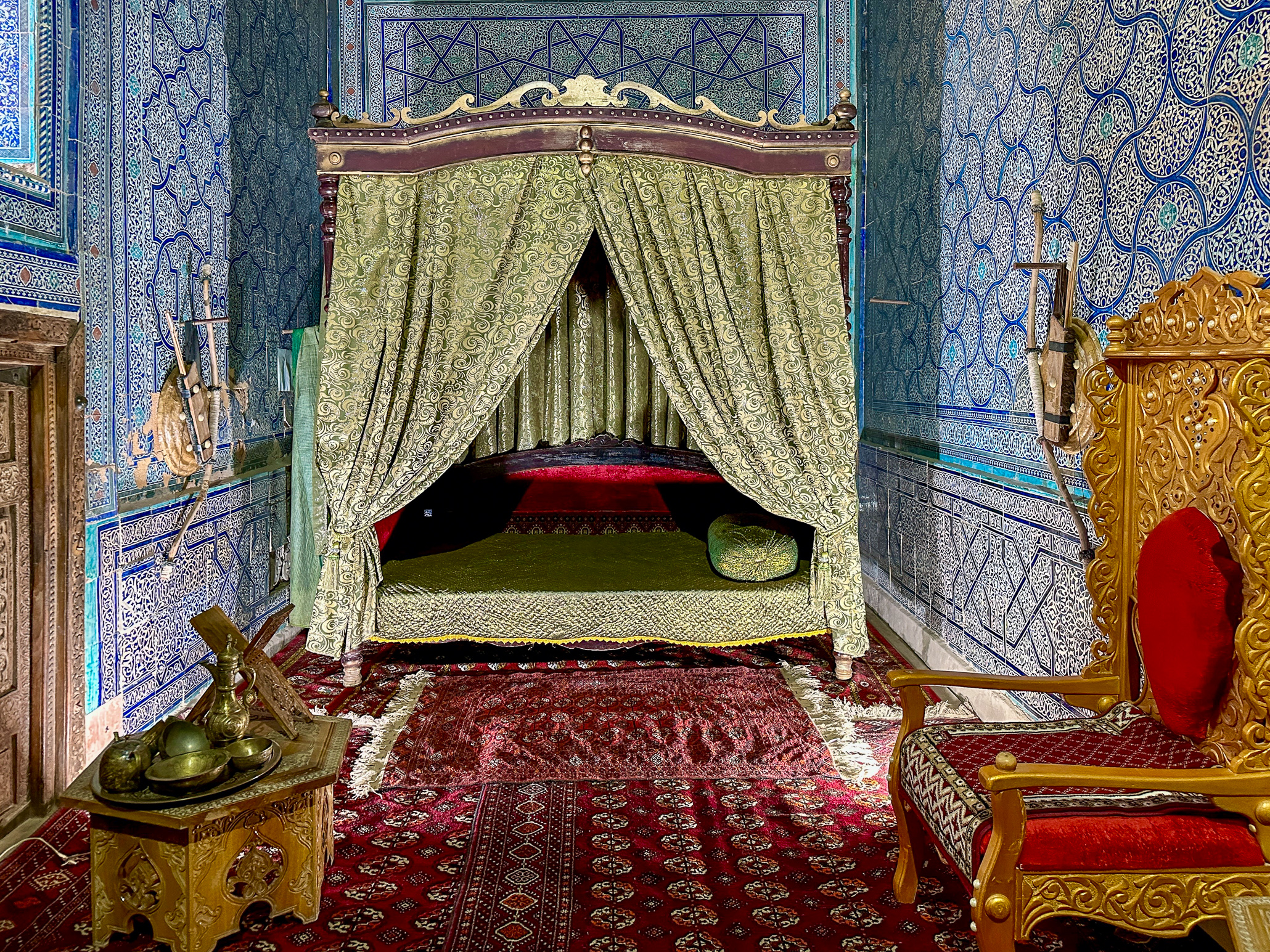
The Tash Khauli Palace, meaning “Stone House,” was constructed in the first half of the 19th century as a more spacious and luxurious residence for the khans. The palace features a series of inner courtyards, harem chambers, guest halls, and administrative offices, all richly decorated with glazed tile mosaics, wooden latticework, and stucco reliefs.
Tash Khauli’s design reflects the social hierarchy of the time, with areas clearly separated by function and status. The royal harem in particular showcases beautiful examples of Khorezmian ornamental art.

Islam Khoja Minaret
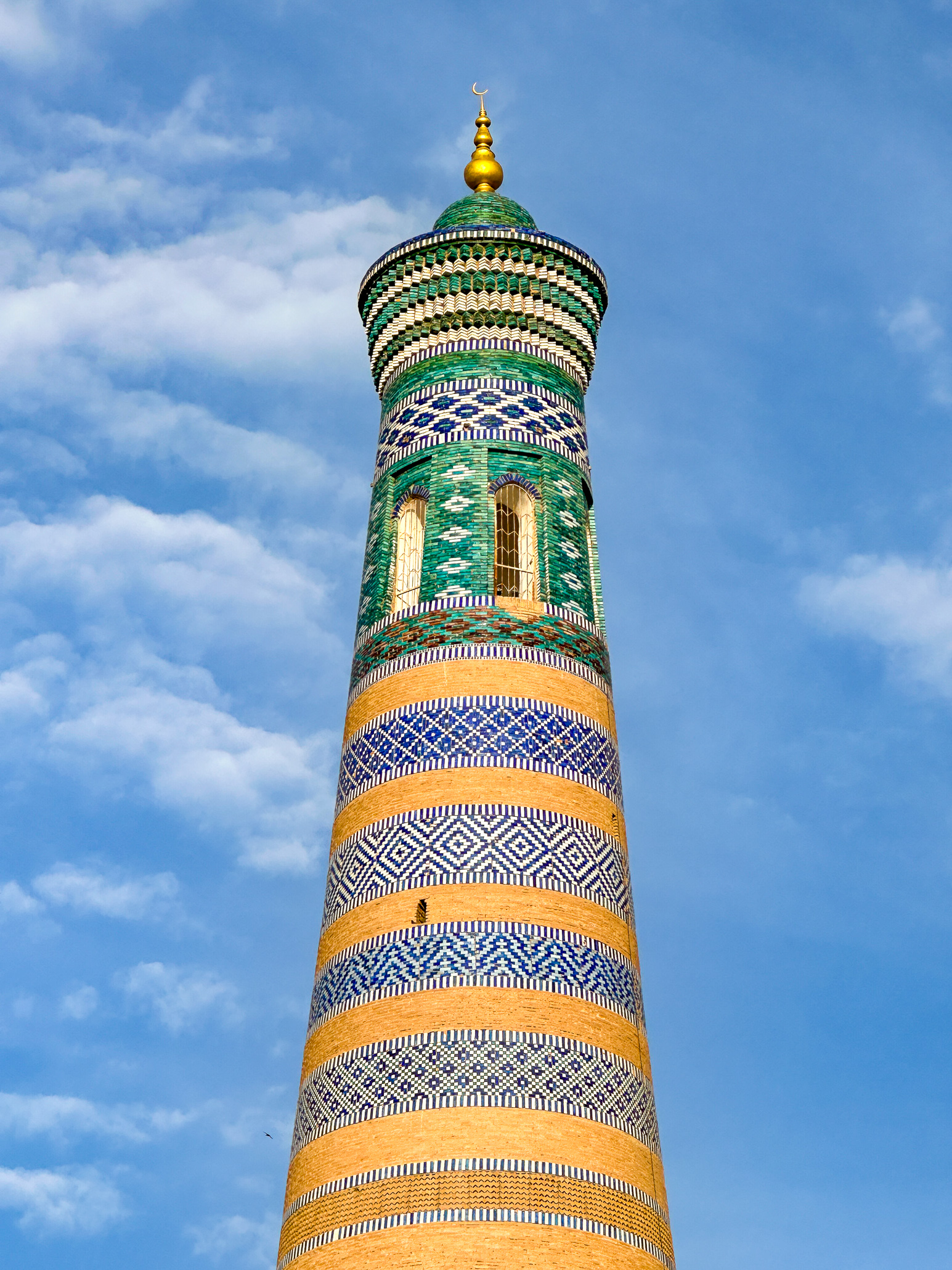
The Islam Khoja Minaret, completed in 1910, is the tallest structure in Khiva, rising to a height of nearly 45 meters. Its slender, tapering design and vibrant tile bands make it an architectural highlight.
Next to the minaret stands the Islam Khoja Madrasah, built by the influential vizier of the same name. The madrasah functioned as a religious school and features arched portals and mosaic patterns typical of late Khivan architecture.
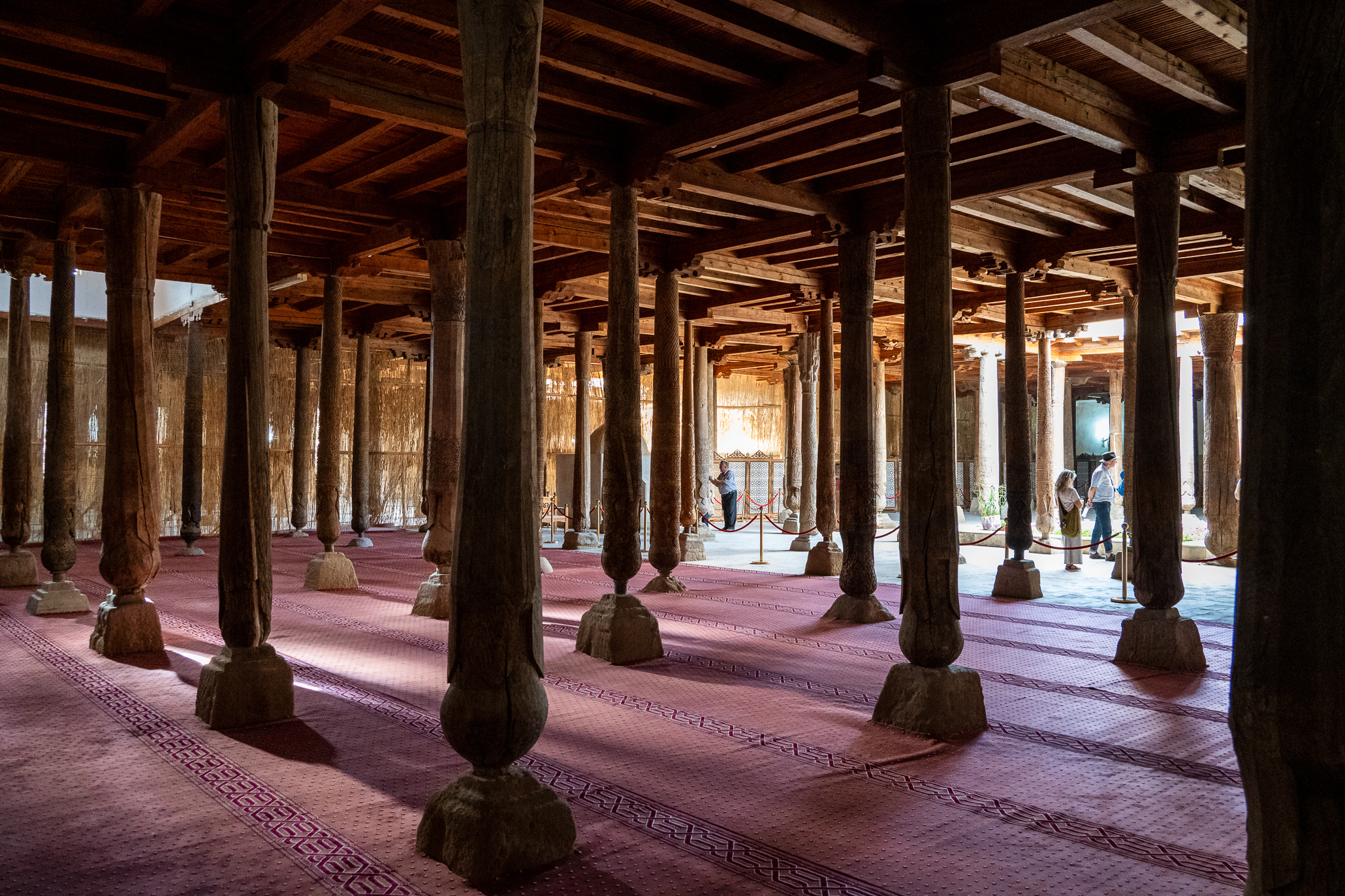
The Forest of Columns: Juma Mosque
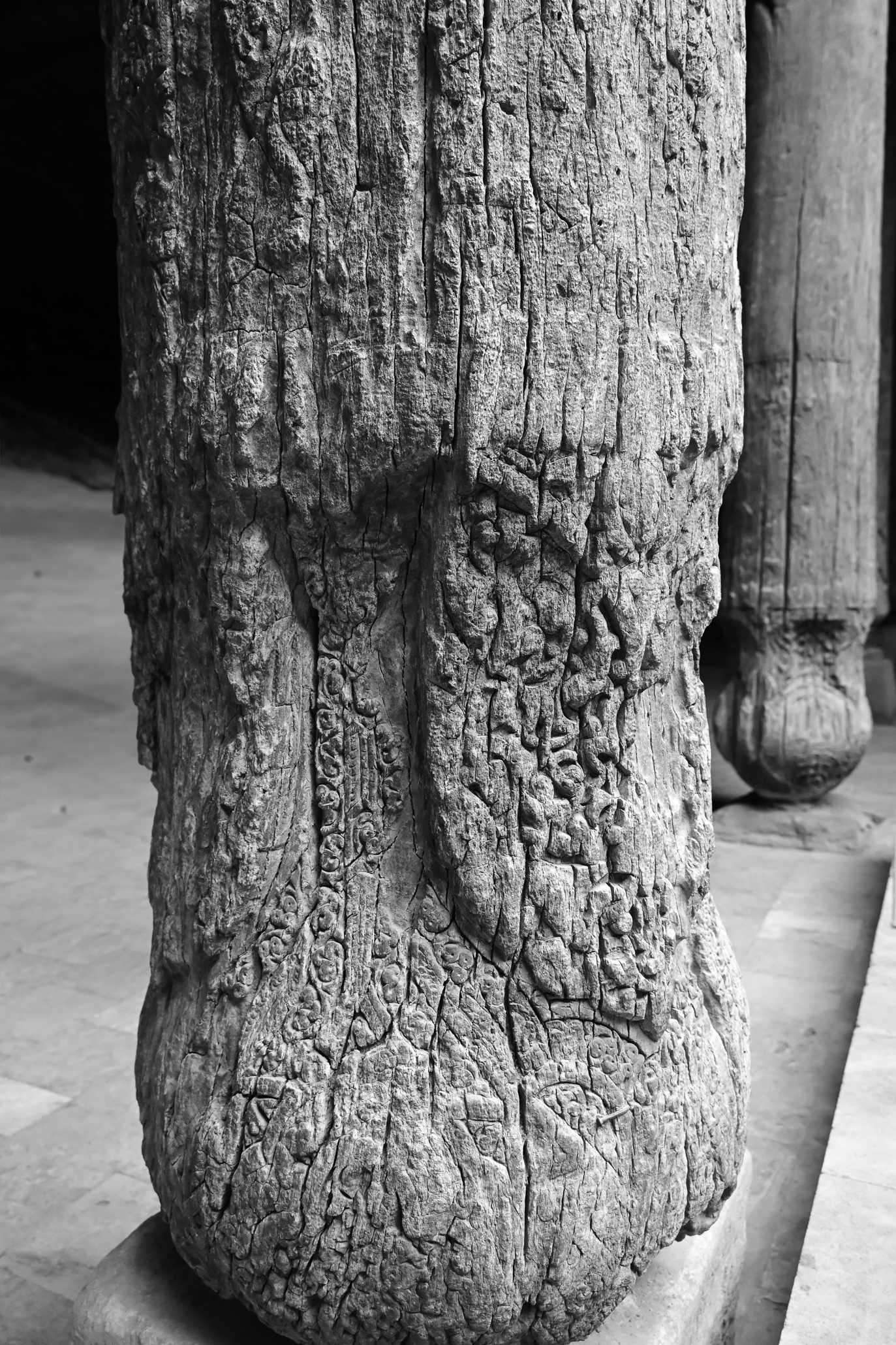
The Juma Mosque might be Khiva’s most unique building. At first glance, it’s unassuming—low, flat-roofed, simple. But inside, we discovered a silent forest of 218 carved wooden pillars. Each one is different, many dating back to the 10th century. Openings in the roof let in beams of light, turning the interior into a cathedral of shadow and silence.

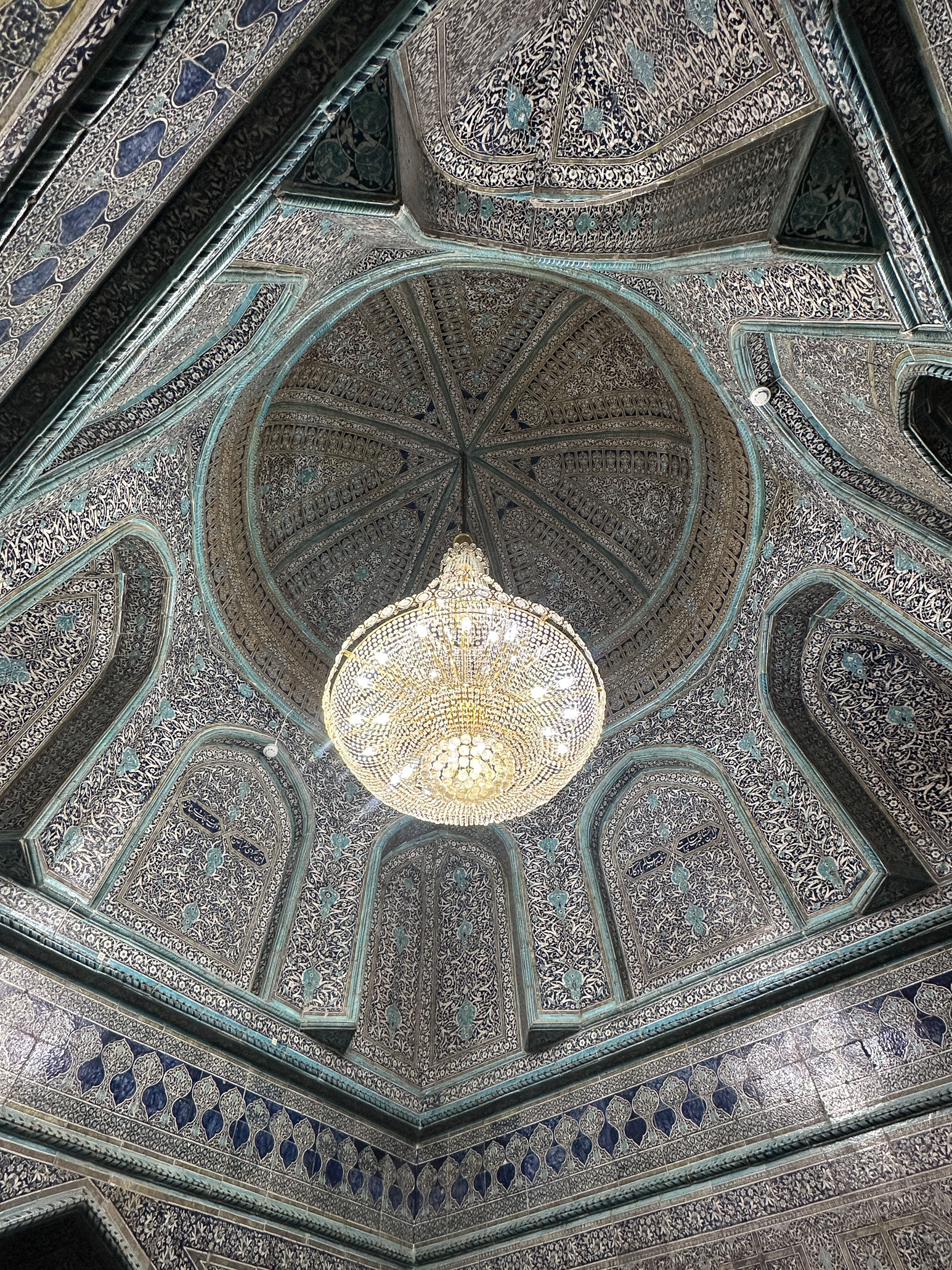
Nearby lies the Mausoleum of Pahlavan Mahmud, the poet-saint and local hero. The inner chamber, crowned with a turquoise dome, is a place of reflection. Devotees still visit, lighting candles and offering prayers. On top, it was a nice and cool break from the desert heat outside.
After our visit to the mausoleum, we slowly went back to our hotel, enjoying the beautiful late afternoon light that flooded the ancient desert city.


We had dinner on the rooftop terrace of our little hotel in the historic city. While eating tasty local dishes, we had the chance to witness a truly magic desert sunset. The sun slowly dipped behind the domes and minarets. The sky turned from gold to orange to rose to violet, and the city’s illuminations came on turning Khiva into a nocturnal desert city wonderland.

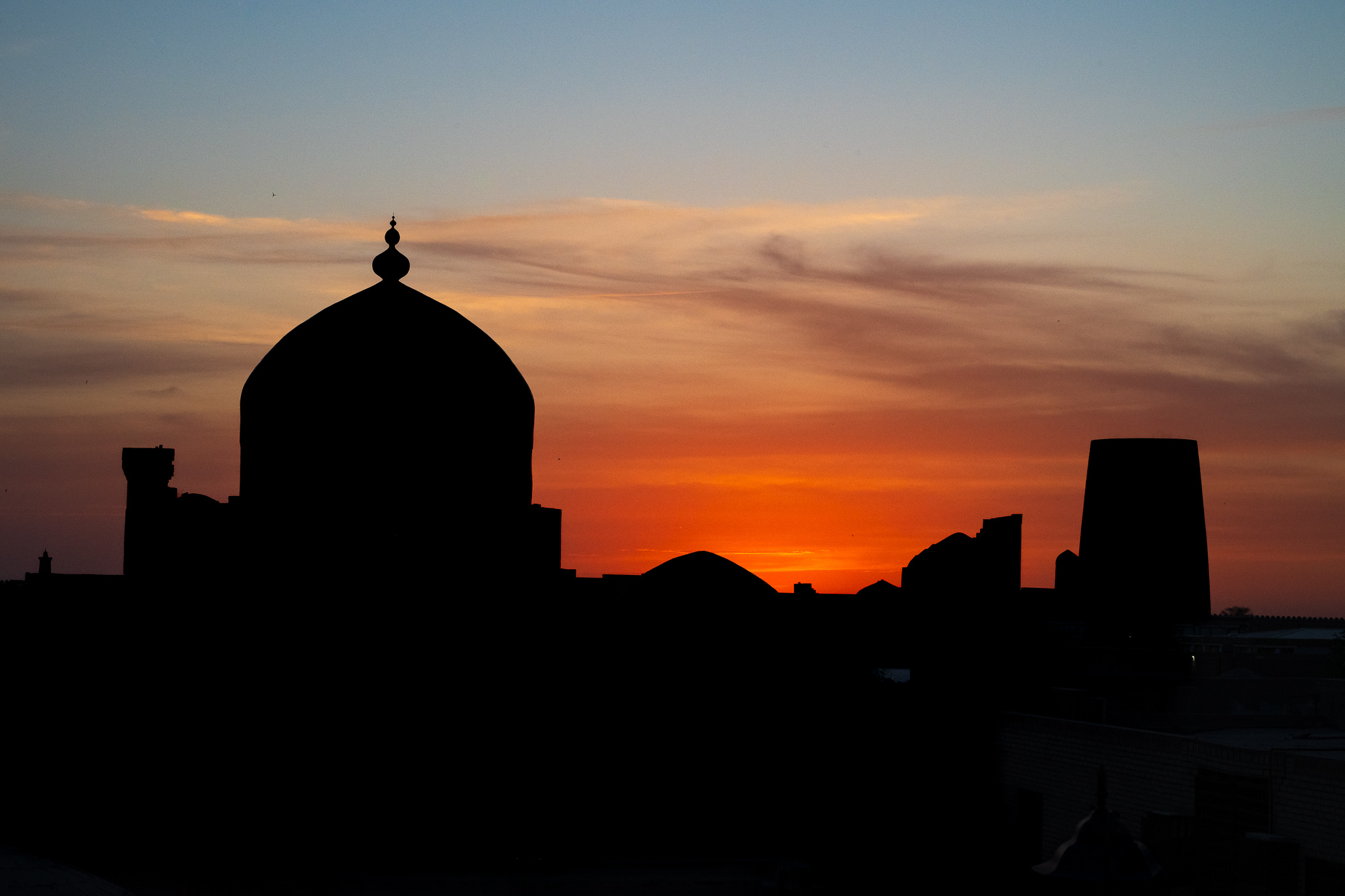
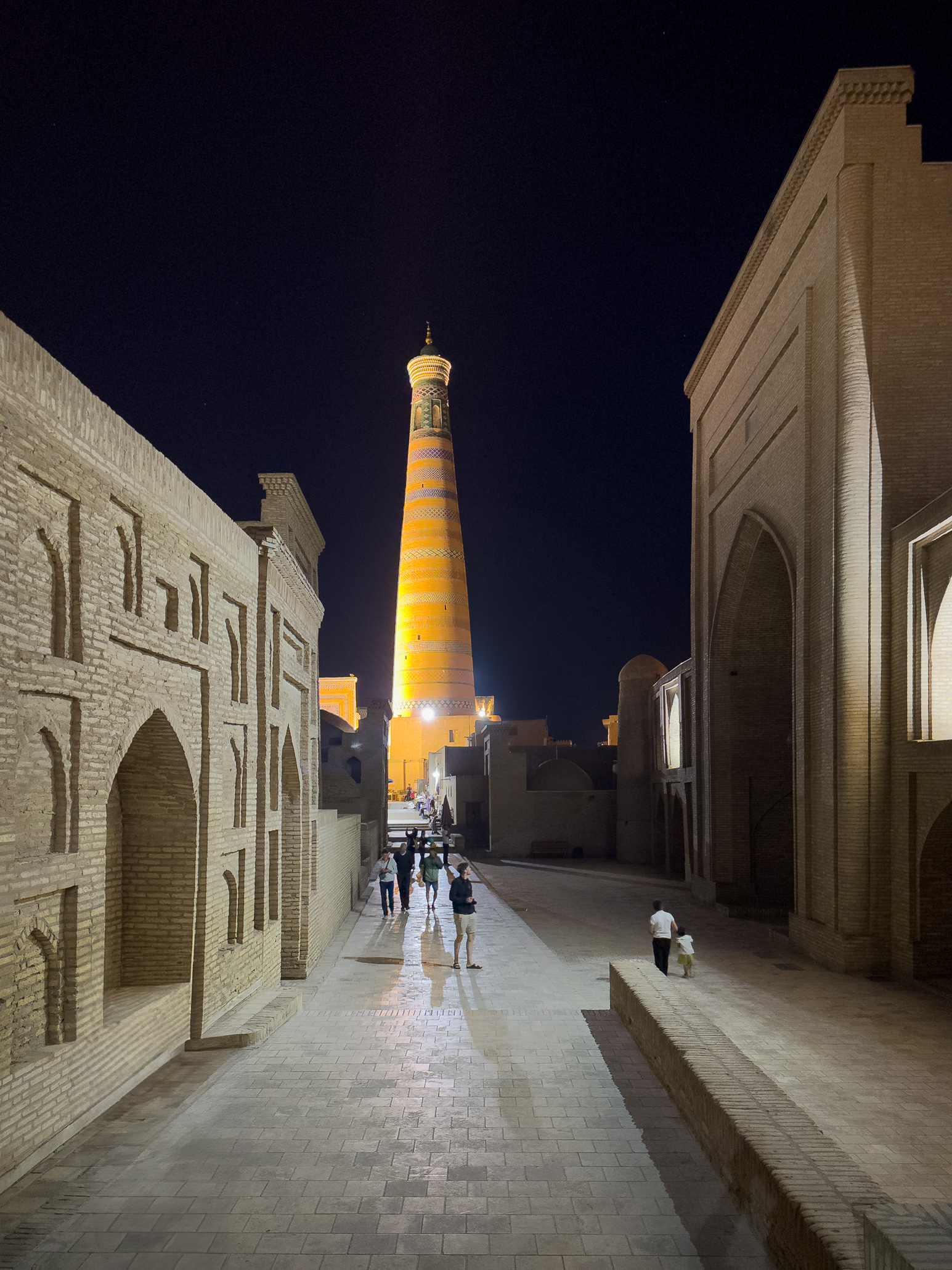
Khiva by Night
As we stayed in a little hotel directly in Itchan Kala, we had the chance to experience the magic atmosphere of the desert city after nightfall. Then, Khiva becomes something else entirely. The crowds thin, the heat lifts, and the monuments come alive under soft amber lights. Minarets glow in silence, casting long shadows across the sand-colored streets. You hear the faint echo of footsteps and the occasional call to prayer drifting through the alleys. It’s hauntingly beautiful—almost surreal. Like in a fairytale from 1001 nights.

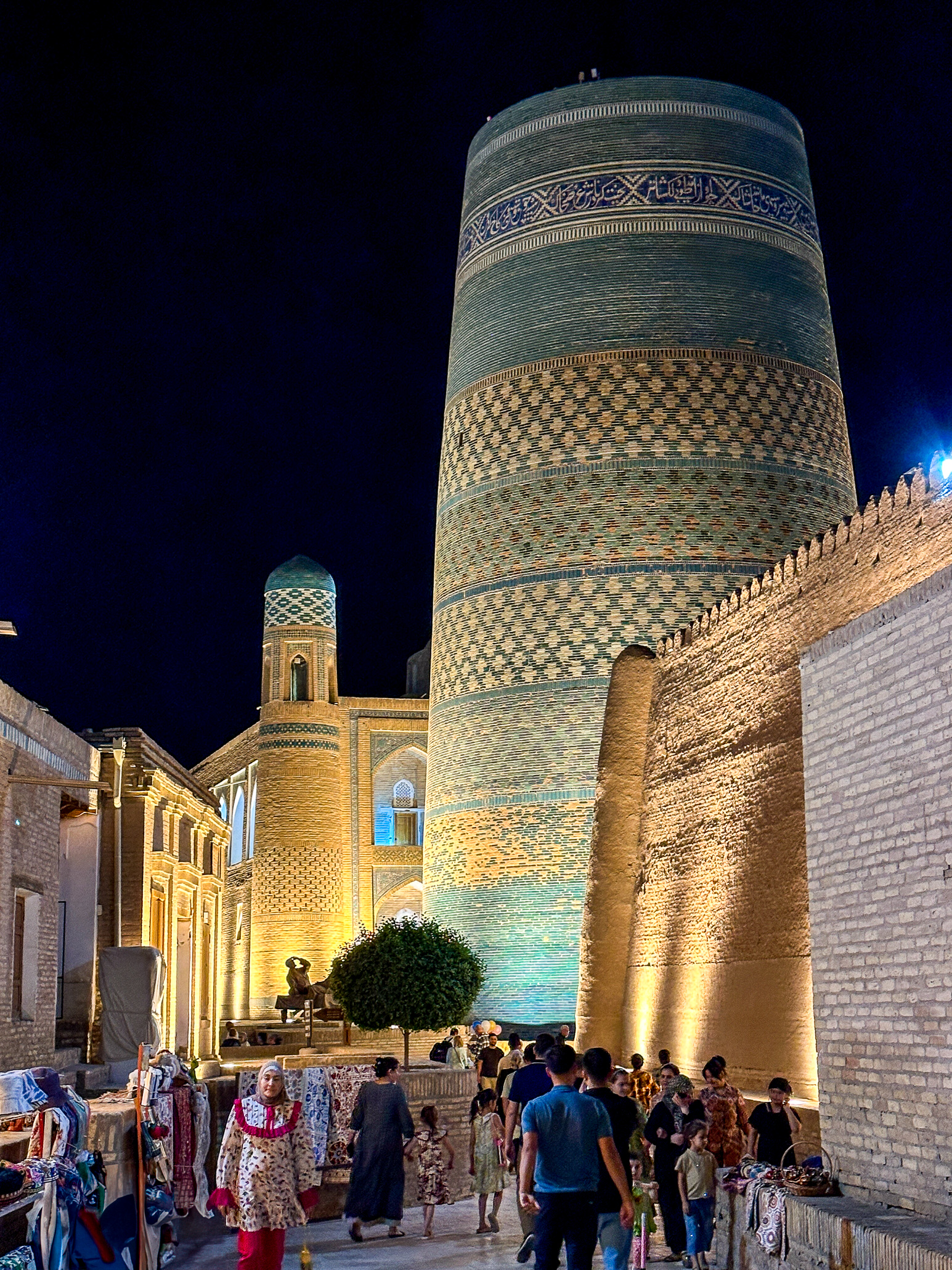
Kalta Minor: The Minaret That Never Was
The famously short Kalta Minor Minaret, standing wide and unfinished beside the Muhammad Amin Khan Madrasah, is a highlight to see by day or by night. It was supposed to be the tallest in Central Asia, but work stopped abruptly in 1855 after the khan’s sudden death. Today, its shimmering turquoise tiles catch the light like a mosaic flame, especially just after sunset when the bricks cool and the last rays bounce off its glazed surface.
Khiva is not just a historic city—it’s a living story. It’s a place where architecture, history, and local life blend seamlessly. Khiva isn’t meant to be raced through. It’s a place to explore slowly, early in the morning or as the sun slows beneath the fortress walls. It reveals itself slowly—through the rattle of carriage wheels, the call of the muezzin, the warm chatter of artisans trading their wares. This is a city where the desert keeps you close, where every tile, pillar, and courtyard tells you a story, if only you listen.
I took these photos with my Nikon Zf and my iPhone 14 Pro. Post processing in Lightroom Classic.
I hope you enjoyed this trip through Khiva. Stay tuned for more from our trip along Uzbekistan’s Silk Road and it’s magic old cities.
Have a great Saturday
Marcus
Related Posts:


Wow! Absolutely, intriguingly, gorgeous. Your photography is beautiful. What I noticed most, however, is the cleanliness of the streets.
Thanks for your visit and kind words, they are so much appreciated! Uzbekistan was fabulous!
Gorgeous!!!!!
Thanks, much appreciated!
Incredible photography. 😊
Thanks, Pepper, so much appreciated! Marcus
Oh, those colors!!! (But I do so love the B&Ws.)
Thanks, Julie, so much appreciated!
What a wonderful experience! The Silk Road! A place I should loved to have seen, so I am contenting myself with virtual tour through your photographs
Thanks so much, Sue, your kind words mean so much! There will be more posts for you to “travel” along!
Marvellous!
fantastic!
⬻𓂀✧ 🔺 ✬ღ☆ 🔺 ∞ ♡ ∞ 🔺 ☆ღ✬ 🔺 ✧𓂀⤖
Thanks, so much appreciated!
🙇♂️
These are beautiful photos, Marcus–especially the ‘looking up’ shots. Gorgeous! The city looks so pristine. Listening to hear the story–I just love the way that sounds. A wonderful post.
Thank you, Lois, really appreciate your kind words! There will be more from Uzbekistan 🙂
Fantastic images Marcus. Looks like an amazing destination for photo buffs like us 😊
Thanks, Joe, much appreciated! There is more to share 😉
A beautiful city, great photos, Marcus!! Thank you for the tour. 👍🏻😎😊
You are welcome, John!
🤙🏻☺️☺️☺️
Wonderful shots, Marcus! I bet the kid came out in you as you explored this ancient city.
Thanks, Bruce, and you are so right! Traveling the Silk Road cities was really reliving the stories I’ve read as a teen and enjoyed so much!